
1. Facebook Lead Ads vs Funnels: What Each One Is
The facebook lead ads vs funnels question comes up in almost every Meta ads audit we run. Both formats use the same ads, audiences and budgets. The difference is where the lead is captured, and that one difference changes cost per lead, lead quality and how much work your sales team does on each contact.
- Facebook lead ads (instant forms) open a form inside Facebook or Instagram. The person never leaves the app, and Meta prefills their name, email and phone from their profile. They tap submit and the lead lands in Ads Manager or your CRM.
- A landing-page funnel sends the click to a page you own. The visitor reads the offer, answers a few questions in a multi-step form, verifies their phone number and then reaches a booking calendar or thank-you page. If you need the basics, our sales funnel glossary entry explains the structure.
Neither is always better. Instant forms remove friction, which is great for volume and terrible for intent. Funnels add a little friction on purpose, which costs some volume and filters for people who actually want what you sell. The rest of this guide is about when each trade-off is worth it.
2. Side-by-Side Comparison
| Factor | Instant forms | Landing-page funnel |
|---|---|---|
| Cost per lead | Usually lower | Usually higher |
| Lead intent | Mixed; many casual taps | Higher; visitor read the page and answered questions |
| Phone number accuracy | Prefilled, often outdated | Typed and verifiable with OTP |
| Qualifying questions | Possible, but users skim | One per screen, with branching |
| Persuasion space | A headline and a short intro | Full page: proof, video, FAQs |
| Booking on the spot | Limited | Calendar on the thank-you page |
| Retargeting audience | Form openers | Page visitors and step-by-step drop-offs |
| Cost per booked call or sale | Often higher once quality is counted | Often lower |
| Setup effort | Minutes | A build: page, form, CRM, tracking |
The last two rows are the real trade-off. Instant forms are fast to launch and cheap per lead. Funnels take a build, but they usually win where it matters: the number of people who become customers for each dollar spent.
3. Why Instant Form Leads Are Cheap and Often Weak
Instant forms are designed to maximize submissions, and Meta's delivery system learns quickly who taps submit most easily. That creates three predictable problems:
- Accidental and casual leads. When the form is prefilled, submitting takes two taps. Some people do it while scrolling, then forget. When your team calls, they hear "I never filled anything out".
- Unreachable numbers. Profile phone numbers are often old, belong to a work line or were never confirmed. Contact rates suffer, and a lead you cannot reach is worth nothing.
- The algorithm learns the wrong lesson. If you only report "lead" back to Meta, it finds more people like your cheapest leads, who are often your worst ones. Cost per lead falls while cost per customer rises.
Personal injury is the extreme example. A plain lead form fills intake with people who were never in an accident, already have a lawyer or were injured years ago, which is why our personal injury funnels use multi-step qualification on a landing page instead. We cover the intake side in detail in our guide to exclusive MVA leads.
You can improve instant forms: choose the higher-intent form type that adds a review step, add two or three custom qualifying questions, and remove optional fields nobody needs. These help. They do not change the core issue that the person never had to read anything about you before becoming a lead.
4. Qualifying Questions and OTP Verification
A landing-page funnel solves the quality problem with two layers.
Layer one: qualifying questions, one per screen. Easy multiple-choice questions first, contact details last. For a roofing lead: roof type, what is wrong, timeline, address. For MVA: accident date, injury and treatment, fault, existing attorney. Each answer filters and routes the lead before anyone picks up a phone. Our lead qualification questions template has proven sets by industry.
Layer two: OTP verification. Before the form submits, the person receives a one-time code by text and types it in. Fake numbers, typos and many bots never become leads. It costs a small share of conversions on the last step and pays for itself at intake, because every lead is a real person who just proved they can receive your messages.
Combine both layers with a call inside 60 seconds and the difference is stark. Across 60+ speed-to-lead deployments, 84% of leads were reached inside the first minute and lead-to-booking rose 2.4x on the same ads. That kind of contact rate is only possible when the number is real.
5. What Our MVA, Roofing and Mortgage Campaigns Show
These figures come from client ad accounts on funnels with qualification and phone verification:
| Campaign | Ad spend | Result |
|---|---|---|
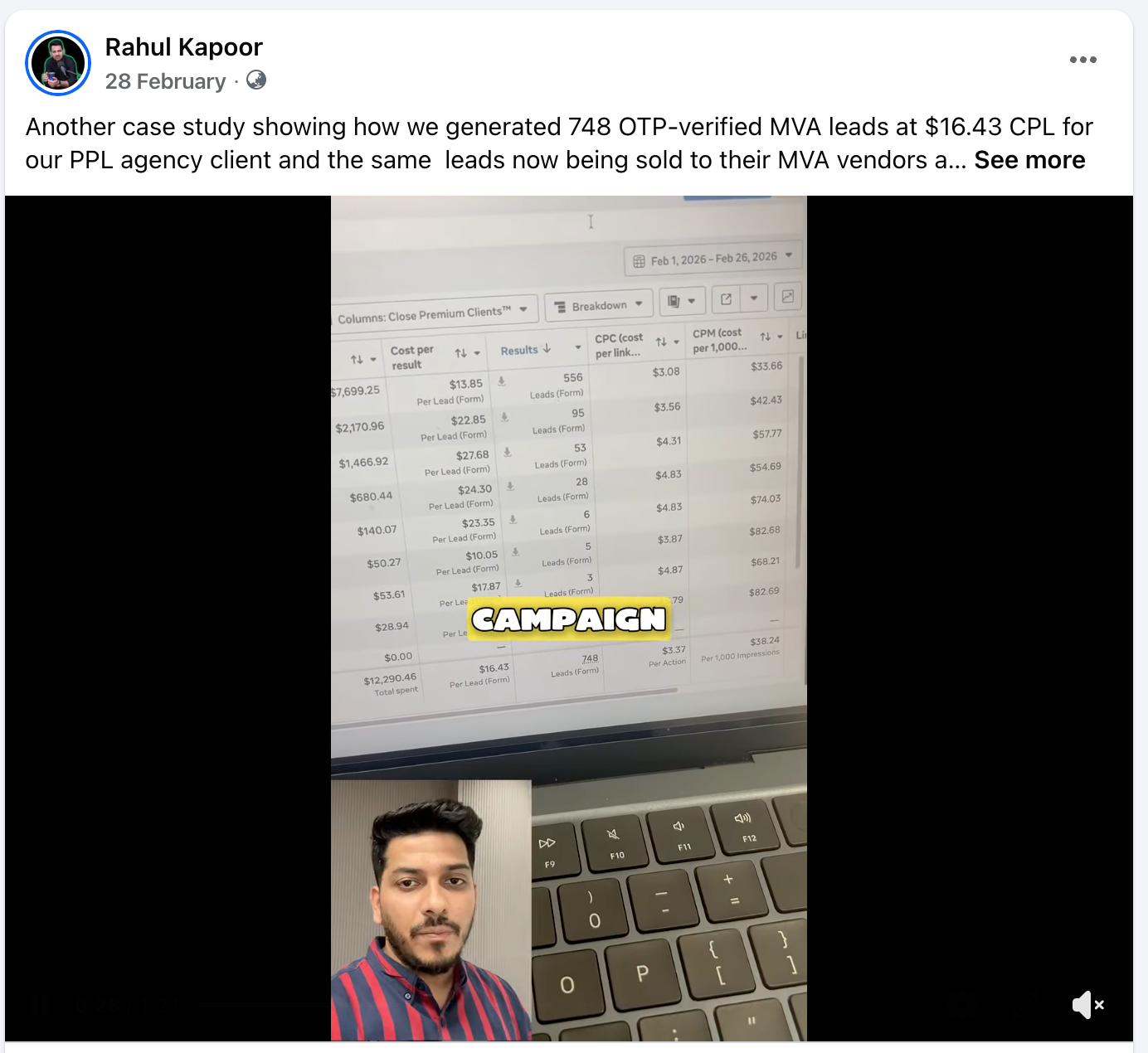
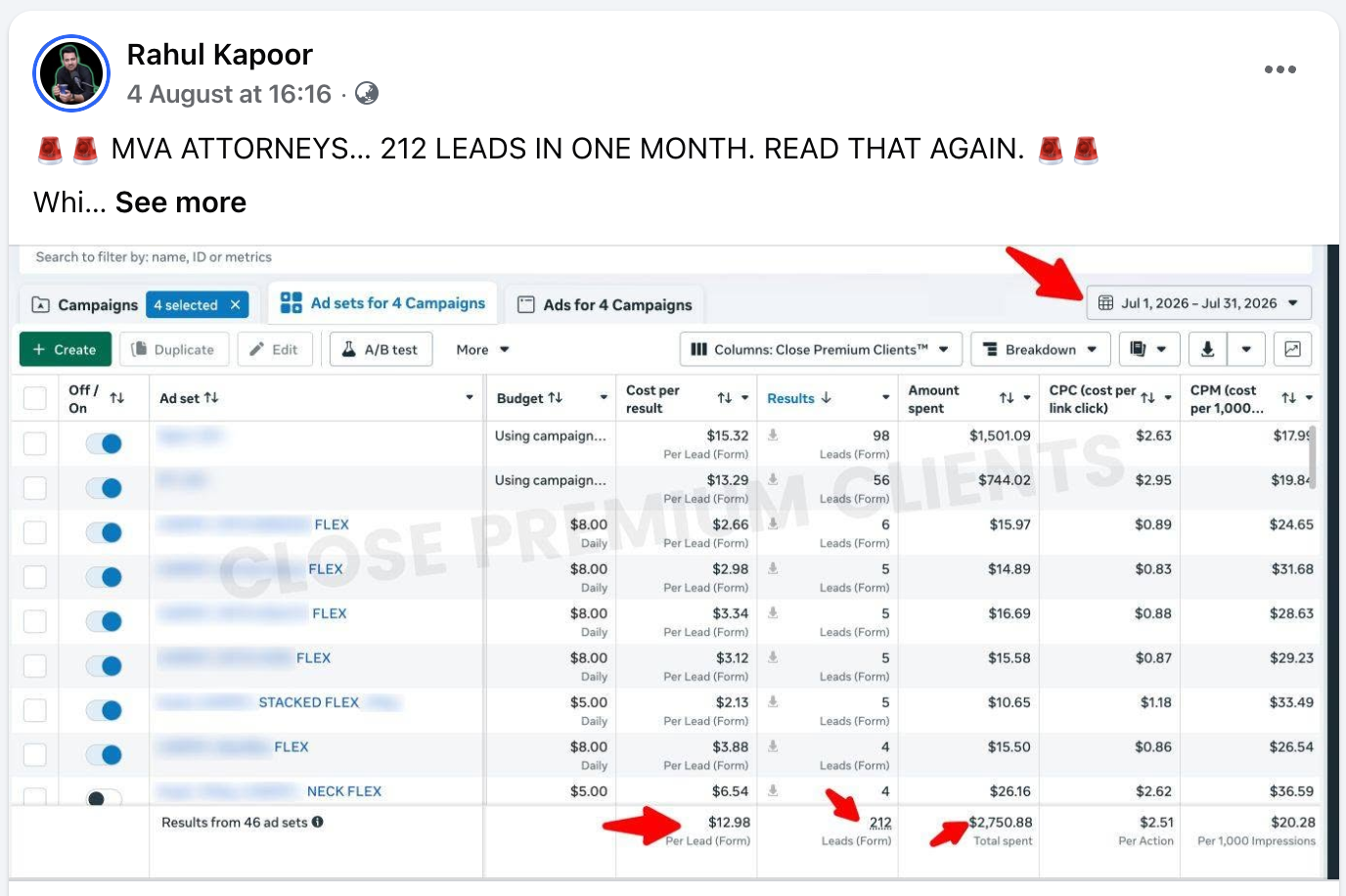
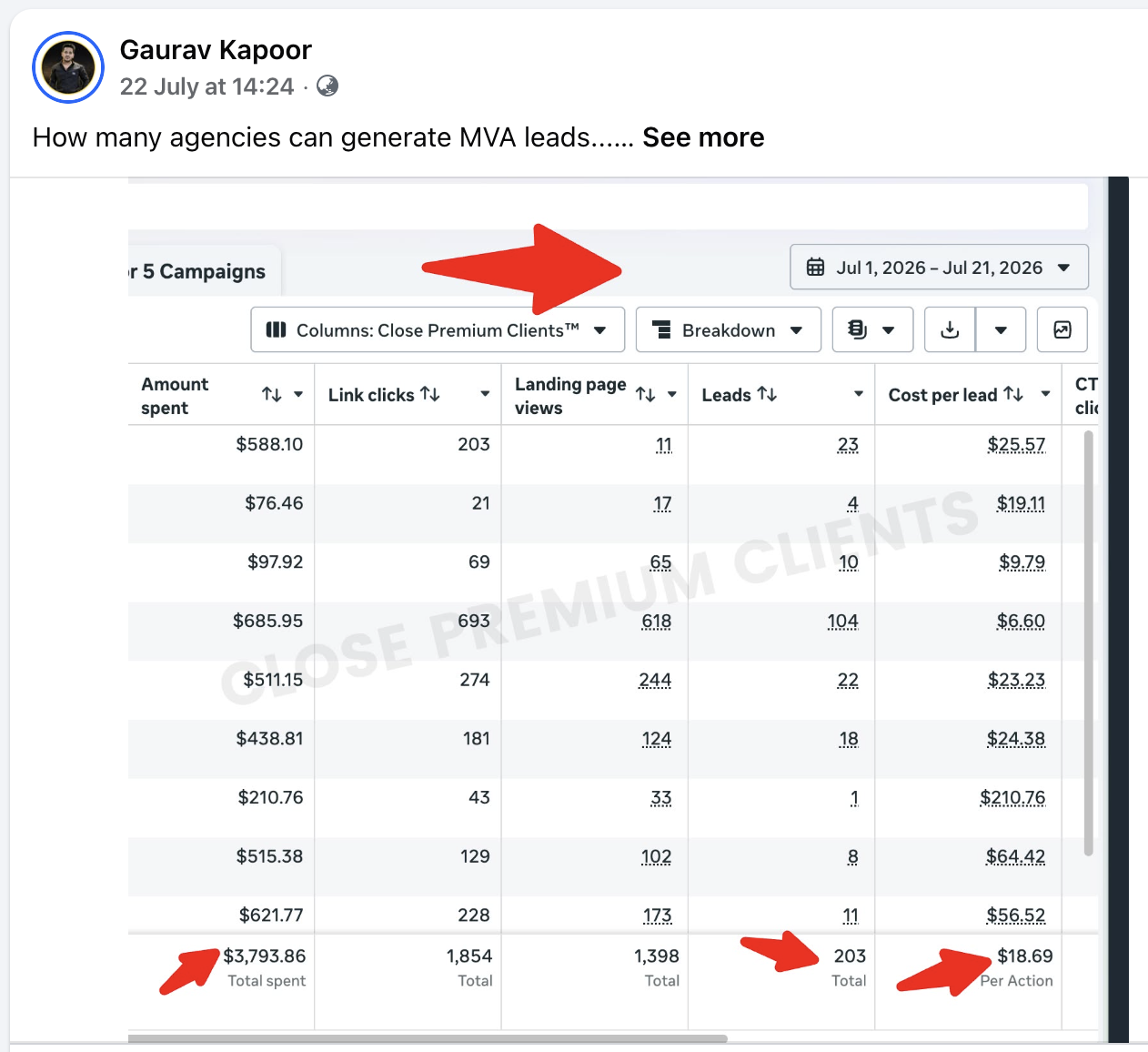
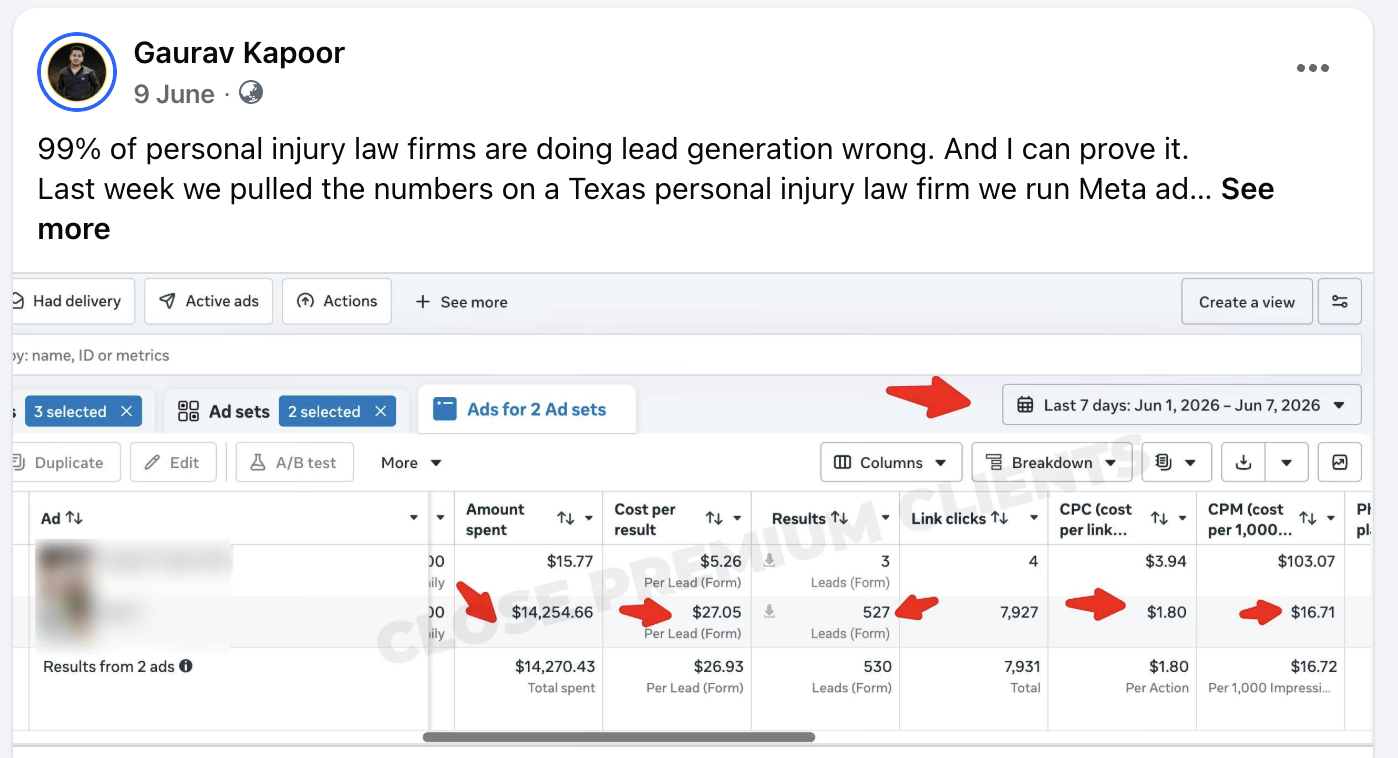
| MVA firm, 30 days | $20,324 | 1,079 OTP-verified leads at $18.94, $388,000 revenue, 19.09x ROAS |
| MVA, 5 days | $5,453 | 276+ OTP-verified calls |
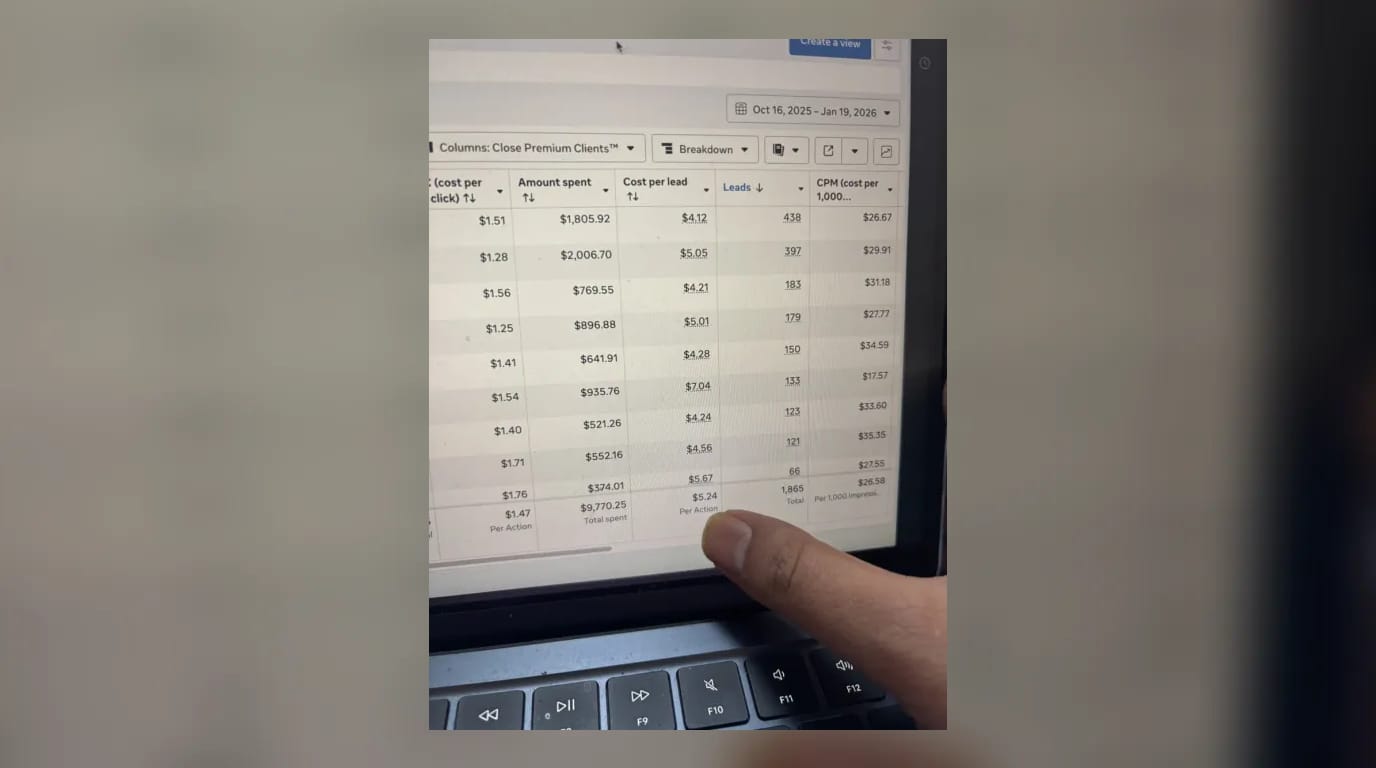
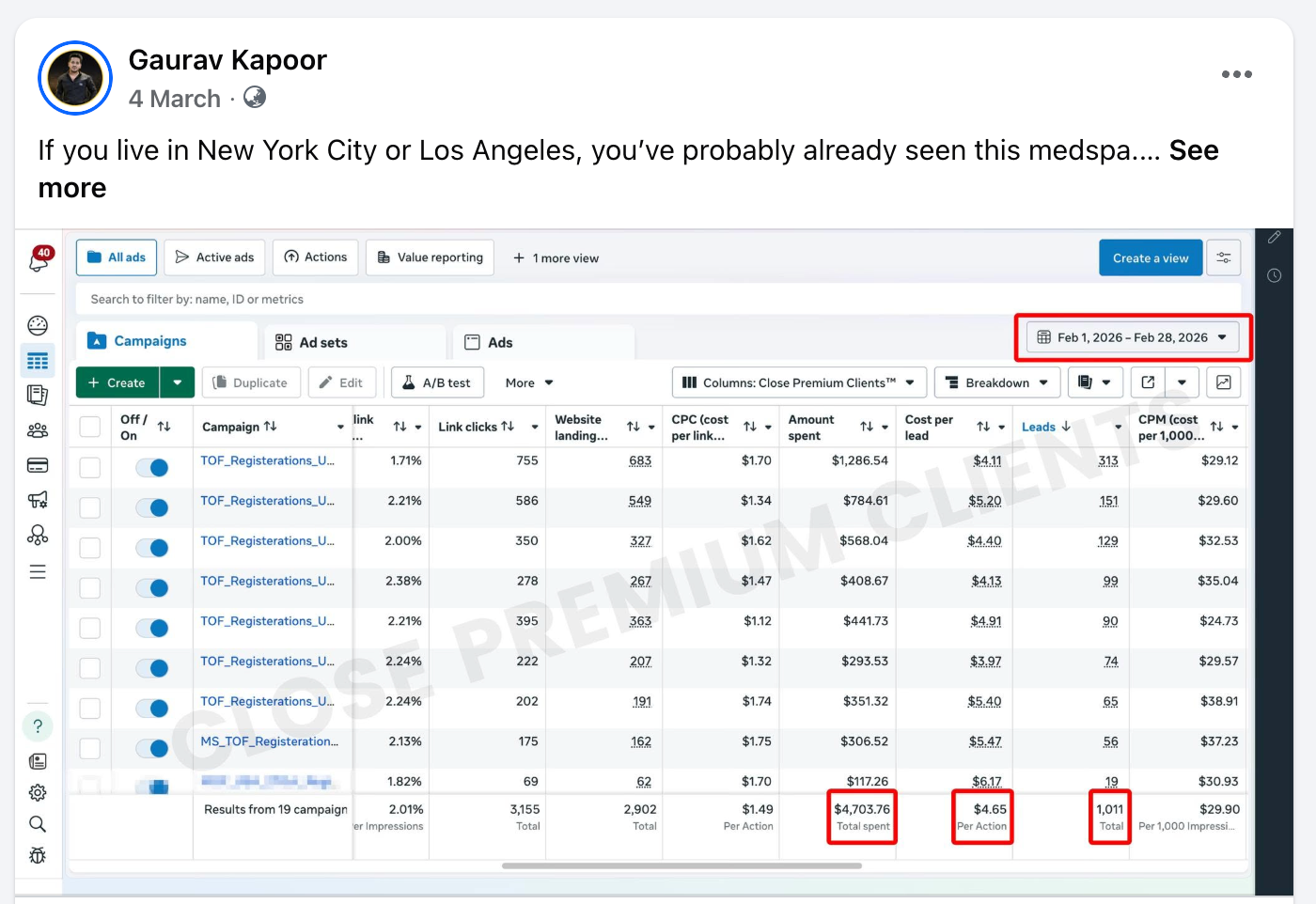
| MVA, multi-step verification | $9,770 | 1,865 leads at $5.24 |
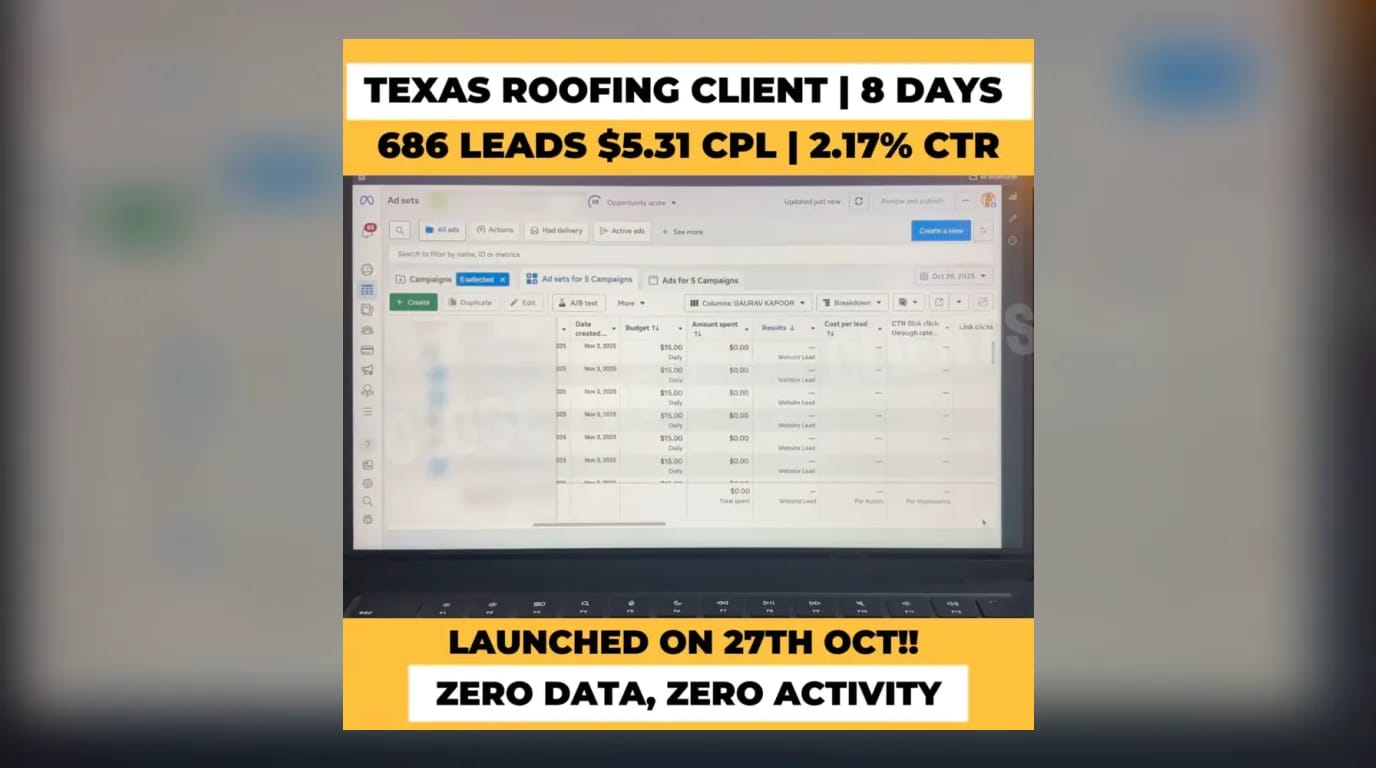
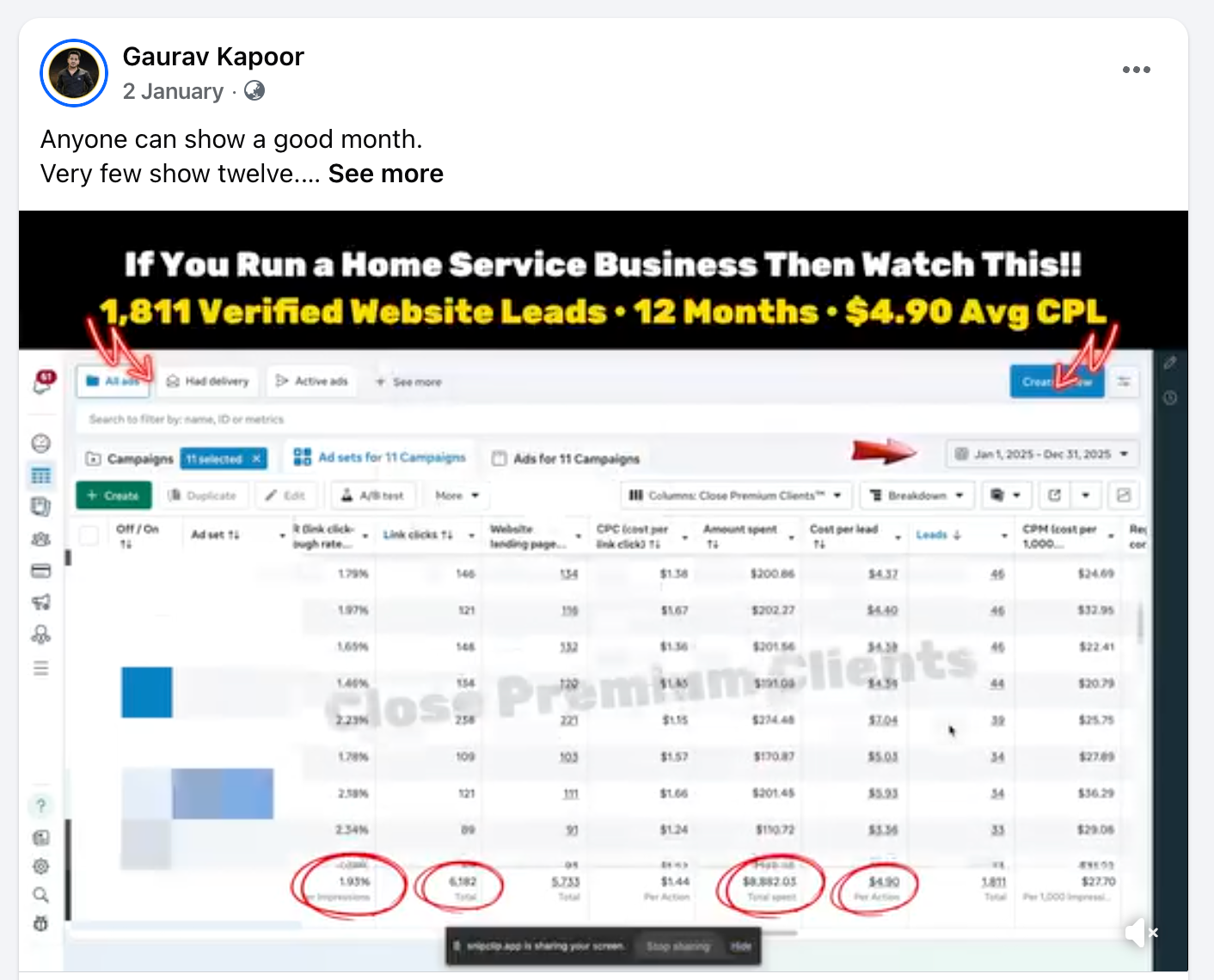
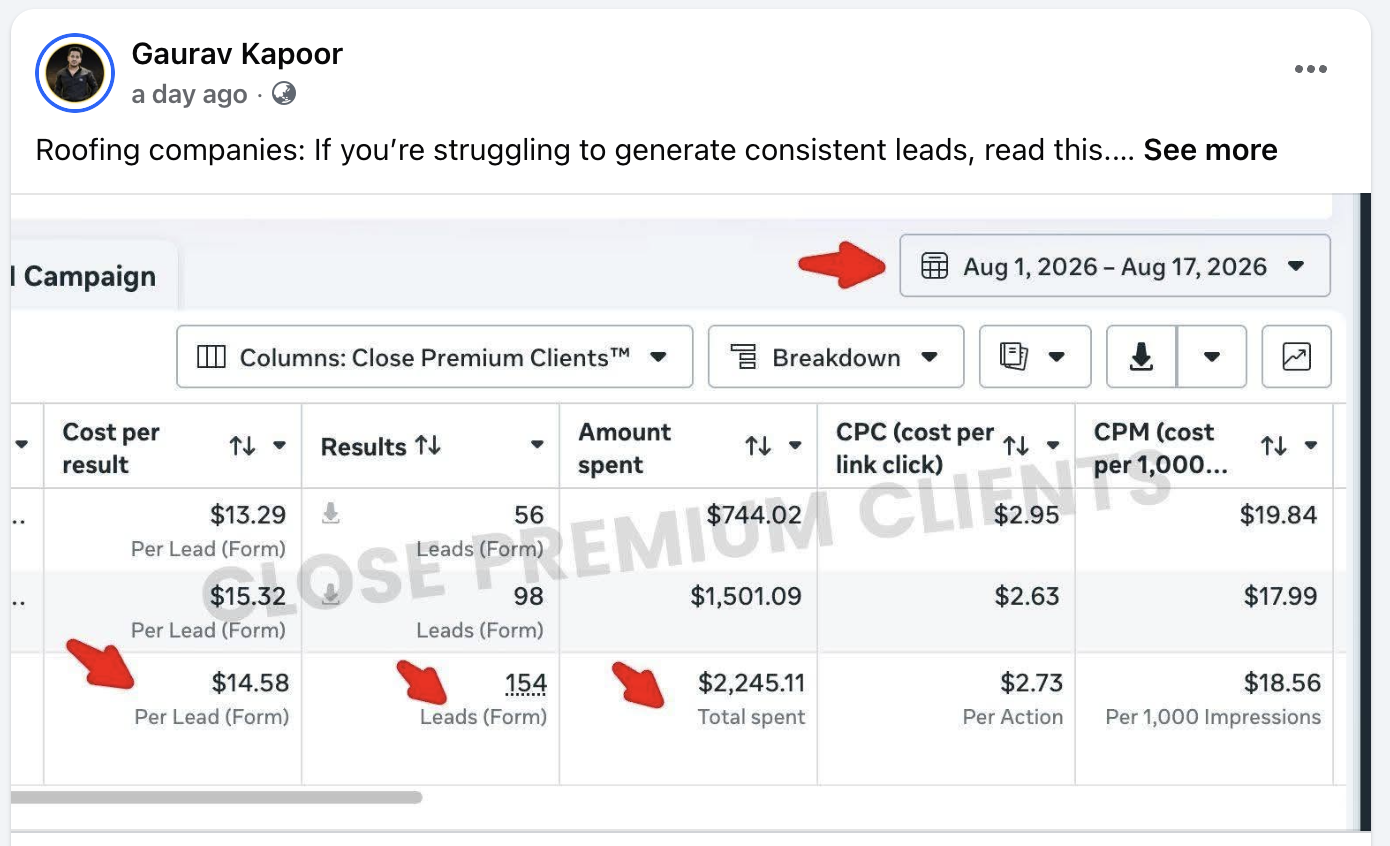
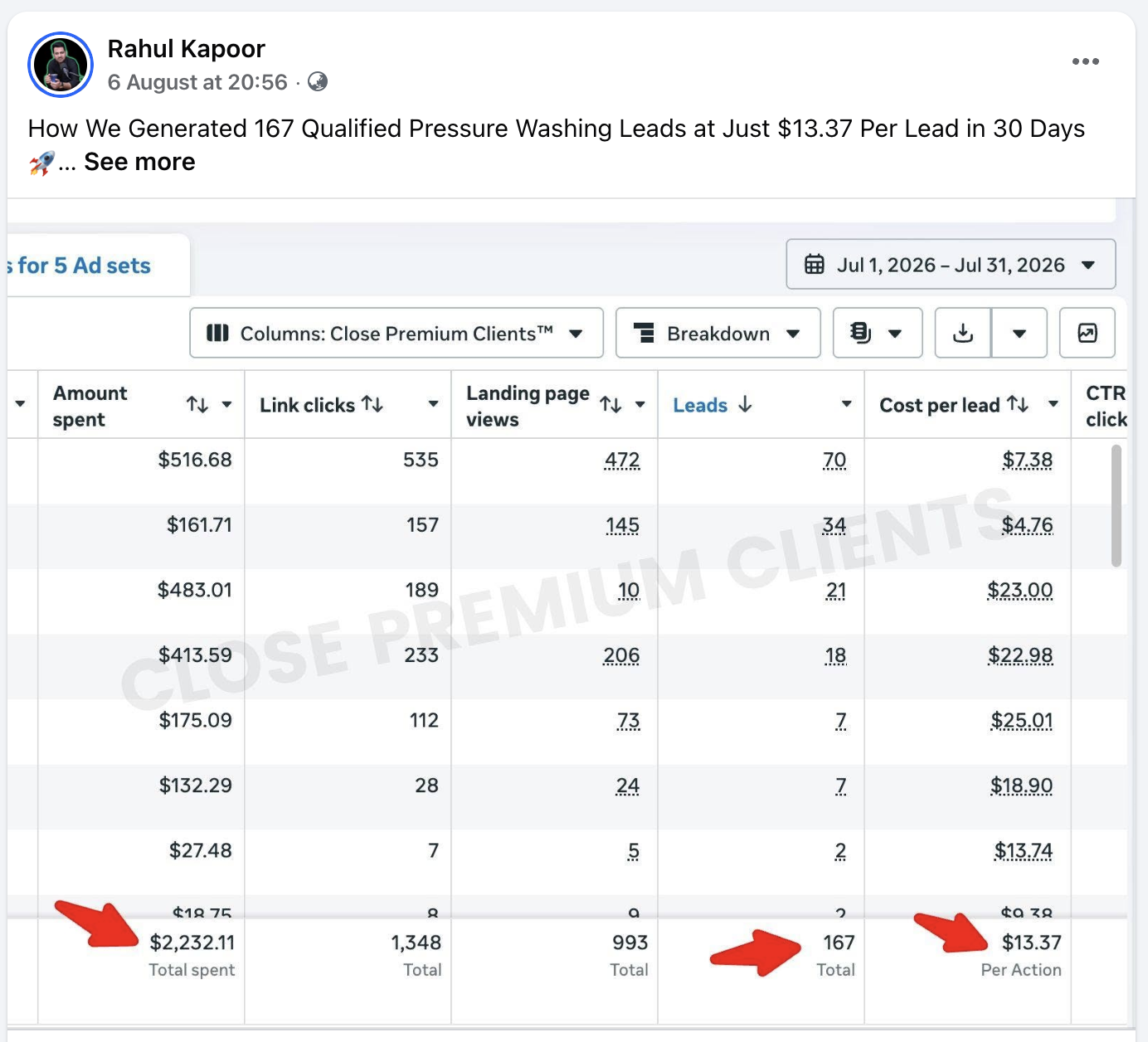
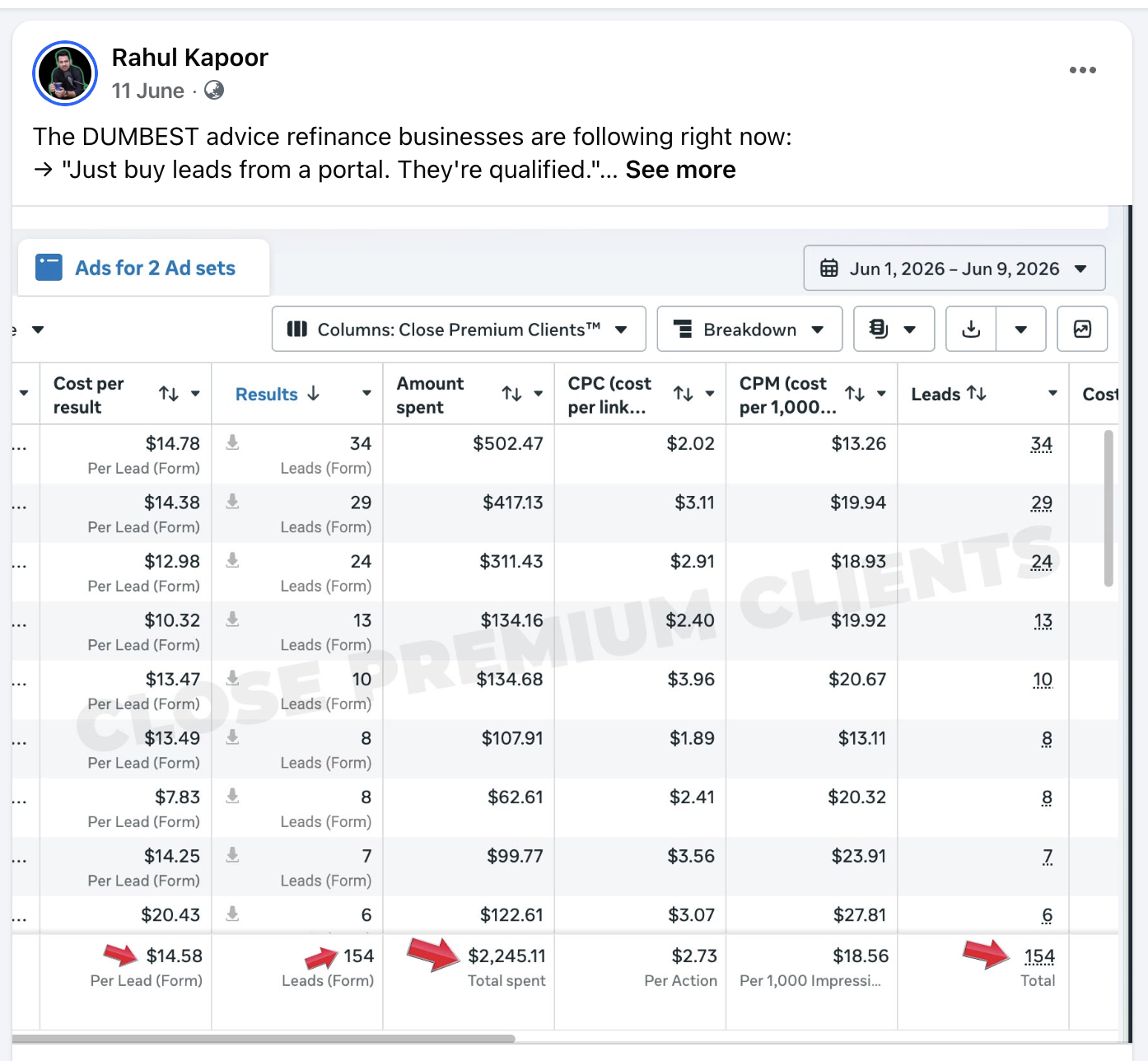
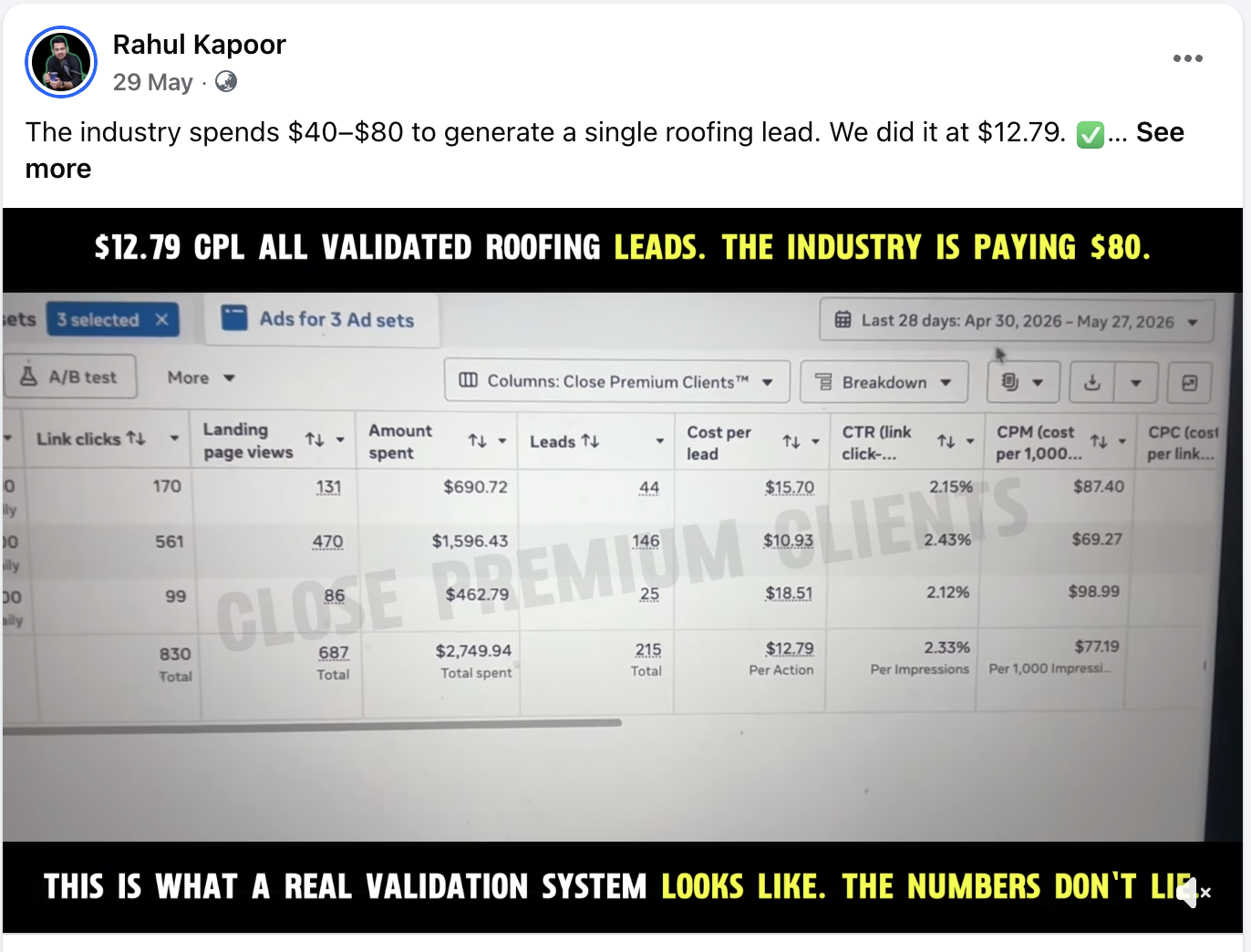
| Roofing | $2,292 | 537 leads at $4.27 |
| Roofing, larger budget | $24,902 | 1,024 leads at $24 |
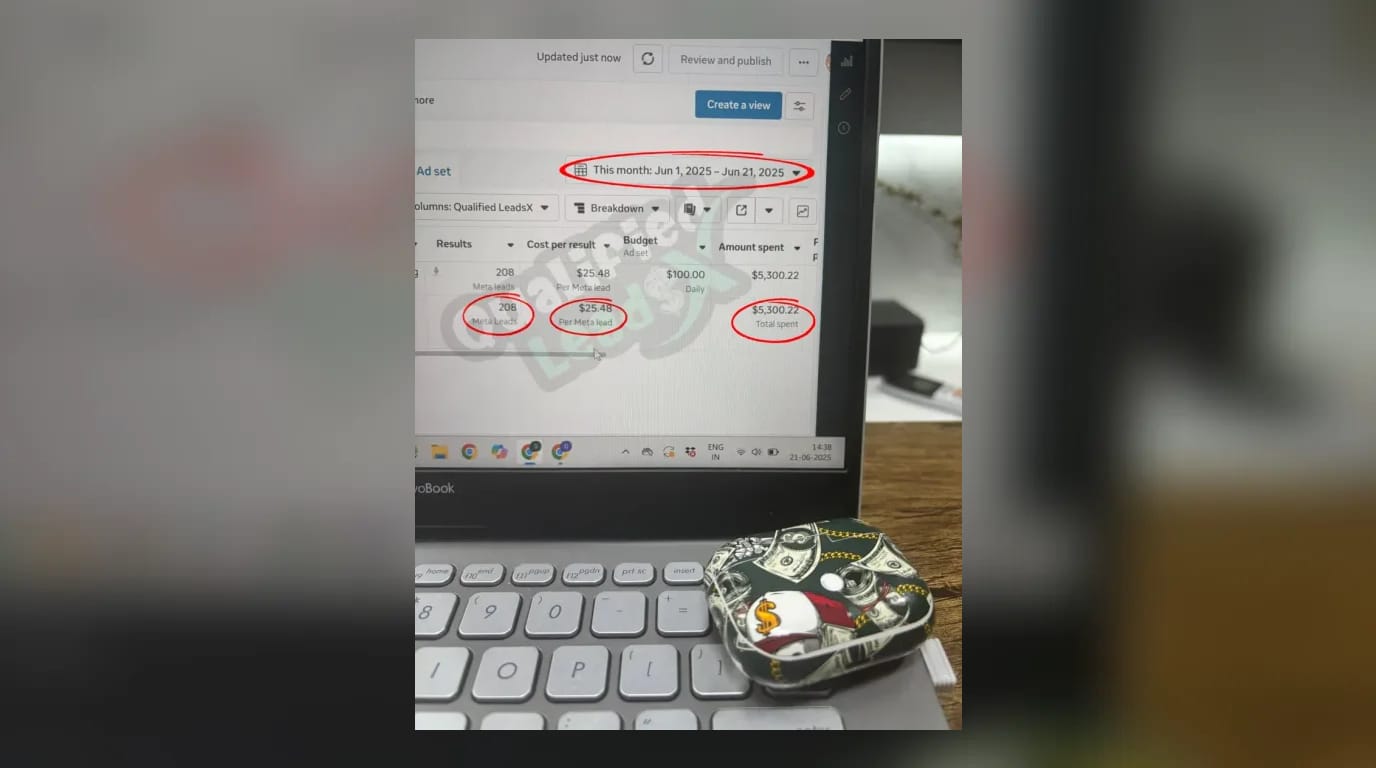
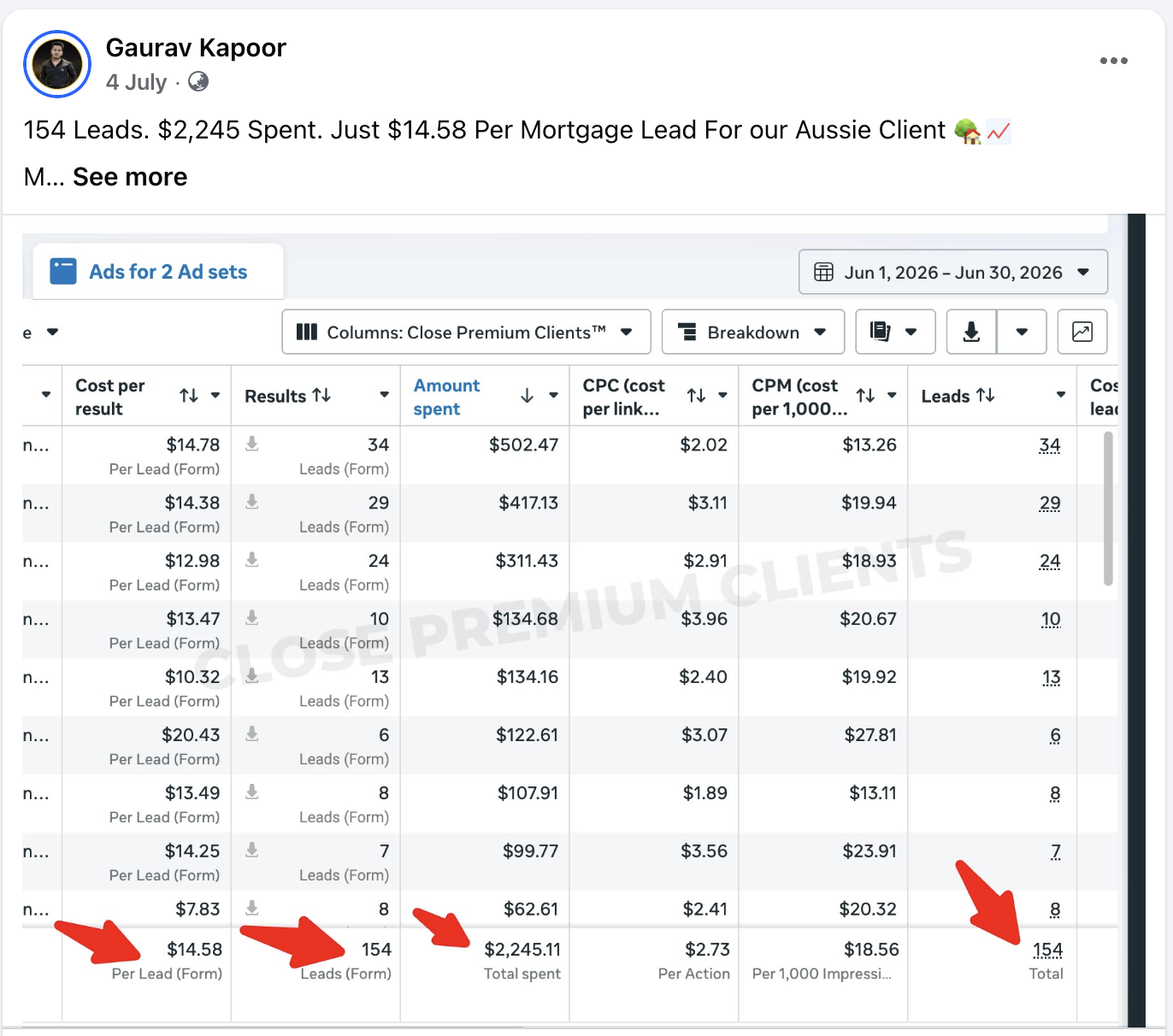
| Mortgage | $5,300 | 208 leads at $25.48, $65K+ revenue |
Two things stand out. First, verified funnel leads are not necessarily expensive: several campaigns landed in the $4 to $6 range. Second, the campaigns that show revenue, not just leads, are the ones where quality was built into the funnel. The MVA firm's $18.94 lead looks pricey next to a $4 lead until you see 19.09x return on ad spend. For a roofing view of the same approach, see our strategy session on OTP-verified lead forms, and for mortgage, our breakdown of OTP-verified mortgage leads on Meta.
6. Follow-Up Works Differently for Each Format
The format you choose changes what your follow-up has to do. Most teams run the same sequence for both and wonder why instant form leads underperform.
Instant form leads need context first. Many of these people submitted in a few seconds and may not remember your company name. The first SMS and the first sentence of the call should restate exactly what they asked for: "Hi Lisa, it's Dan from [company]. You asked about a free roof inspection on Facebook a minute ago." Speed matters even more here, because the memory of tapping submit fades within minutes. Expect a lower contact rate and plan more attempts across the first two days.
Funnel leads arrive pre-qualified. They answered your questions and verified their number, so the call can skip basic screening and go straight to the specifics they gave you. Their answers should route them: urgent or high-value leads to a human setter or an AI voice agent calling inside 60 seconds, early-stage leads to a nurture sequence. The thank-you page can show a booking calendar, so some leads book before anyone calls at all.
Either way, the CRM should tag each lead with its format and ad set, so contact rate, booking rate and show rate can be compared side by side. Without that tag, the comparison in the next sections is guesswork. The same instant SMS, call and reminder workflow can serve both formats, with only the first message and the qualification step changed.
7. When Instant Forms Are the Right Call
Instant forms are not a mistake. They are a tool with a specific job. They tend to win when:
- The offer is simple and low-commitment, such as a free guide, a waitlist or an event registration, where reach matters more than qualification.
- You are retargeting warm audiences who already know you, such as past page visitors or video viewers. Intent is already there; the form just captures it.
- You need fast market testing. Instant forms let you test offers and angles in days before investing in a full funnel build.
- Your follow-up is instant and your sales team is strong, so a lower-intent lead can still be converted on the phone within a minute.
They tend to lose when the sale is high-value, the lead needs to meet criteria (injury, credit band, property type, budget), or your team is wasting hours calling people who never pick up.
8. How to Decide, and How to Measure It
The honest answer is to test, with the right scoreboard. Run both formats against the same audience, offer and creative, with separate ad sets and equal budgets for at least two weeks. Then compare:
- Cost per lead (the number everyone looks at)
- Contact rate inside the first hour
- Cost per booked appointment
- Show-up rate and cost per attended appointment
- Cost per signed client or sale
Whichever format wins on the last two numbers wins. To make Meta optimize for those same outcomes, send booked, attended and closed events back through server-side tracking. Our Meta Conversions API setup recovered 31% more events than the pixel alone on client builds, which gives the algorithm a clearer picture of who actually becomes a customer. The step-by-step version is in our Conversions API guide for lead funnels.
If you want a landing-page funnel with qualification, OTP verification, CRM routing and tracking built for you, it is what our sales funnel agency does every week, live in 5 to 10 business days. Book a strategy call and bring your current cost per lead and cost per customer.
Results from this playbook
Verified client results built on the system in this article, with the numbers from the ad account and CRM.
- $388,000RevenueMVA Case Study: $388K Revenue on $20K Ad Spend
- 8,810Leads generatedMVA Case Study: 8,810 Leads at $7.61 CPL
- $65K+RevenueMortgage Case Study: $65K+ Revenue on $5,300 Ad Spend
- 492Leads generatedMortgage Case Study: 492 Leads at $5.23 CPL
All MVA & personal injury lead generation case studies · All mortgage & insurance lead generation case studies
Frequently Asked Questions
Are Facebook lead ads cheaper than landing page funnels?
Usually yes on cost per lead, because the form opens inside Facebook and fields are prefilled, so more people submit. The catch is that more of those leads are low intent, mistyped or unreachable. Once you measure cost per booked appointment or cost per signed client, a landing-page funnel often comes out ahead.
Why are my Facebook lead ad leads so bad?
Prefilled forms make submitting almost effortless, so people tap through without reading, forget they applied or use an old number. Fix it by adding qualifying questions, choosing the higher-intent form option with a review step, calling inside a minute, and sending only qualified-lead events back to Meta so the algorithm stops chasing form-fillers.
What is an OTP-verified lead?
A lead who received a one-time code by text message and entered it before the form submitted. It proves the phone number is real, belongs to the person and can receive messages. Fake numbers, typos and many bots never become leads, so your intake or sales team only calls people who can actually be reached.
Can I use both instant forms and a funnel at the same time?
Yes, and many accounts should. Run both formats against the same audience and offer with separate budgets, track each through to booked calls and sales in your CRM, and shift spend toward whichever produces customers more cheaply. Some advertisers keep instant forms for retargeting warm audiences and funnels for cold traffic.
Do landing page funnels work better with the Conversions API?
They work better with it, as do instant forms. Server-side events let you tell Meta which leads booked, showed up or bought, not just which ones submitted. On our builds the Conversions API recovered 31% more events than the pixel alone, which gives the algorithm more and better signal to optimize toward real customers.

Gaurav Kapoor
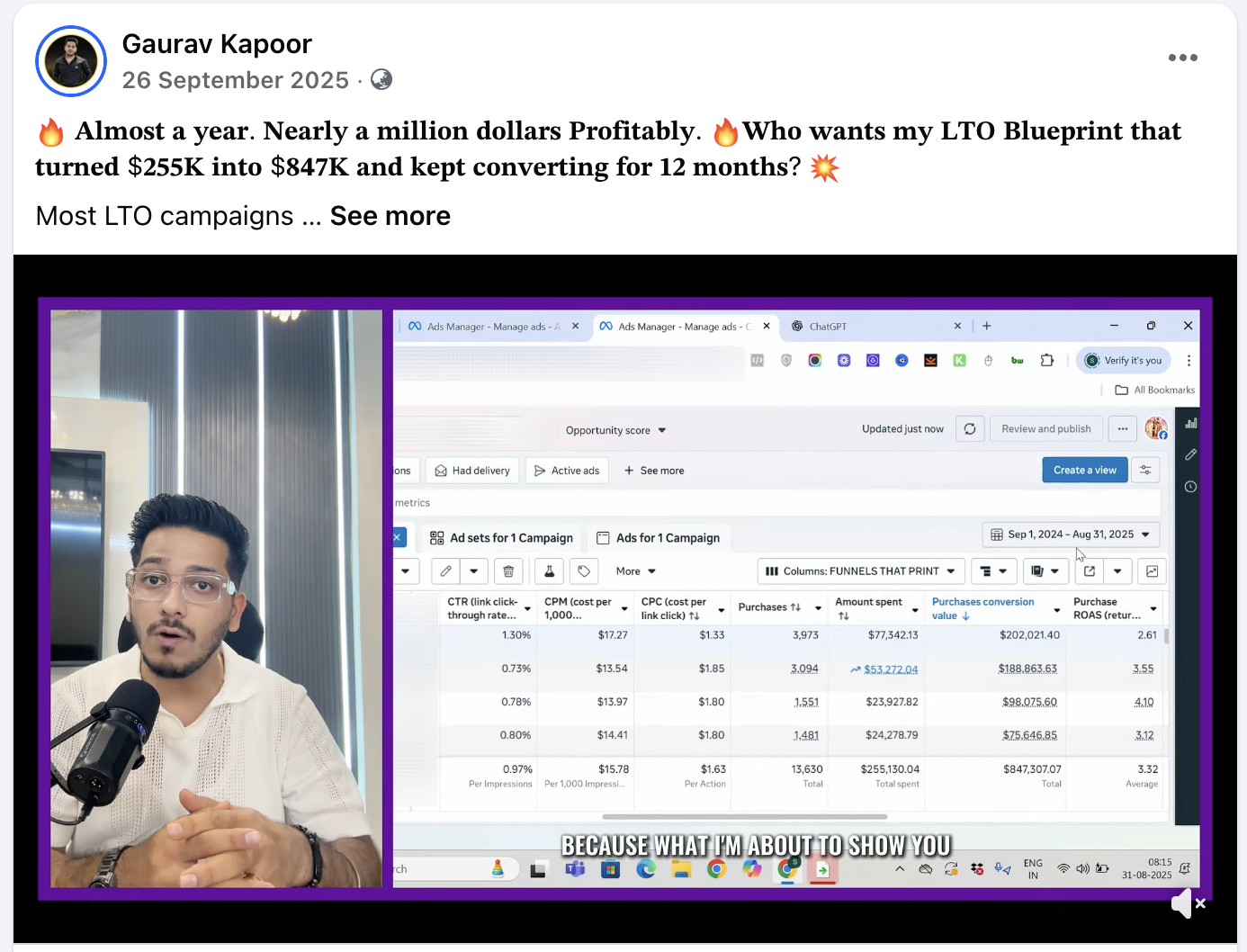
Founder of Funnels That Print. Since 2019 Gaurav has architected high-ticket and low-ticket acquisition funnels for coaching, consulting, home services, finance and DTC brands, including the $1.52M high-ticket consulting funnel and the $847K self-liquidating offer funnel documented on this site.
More from Gaurav ↗