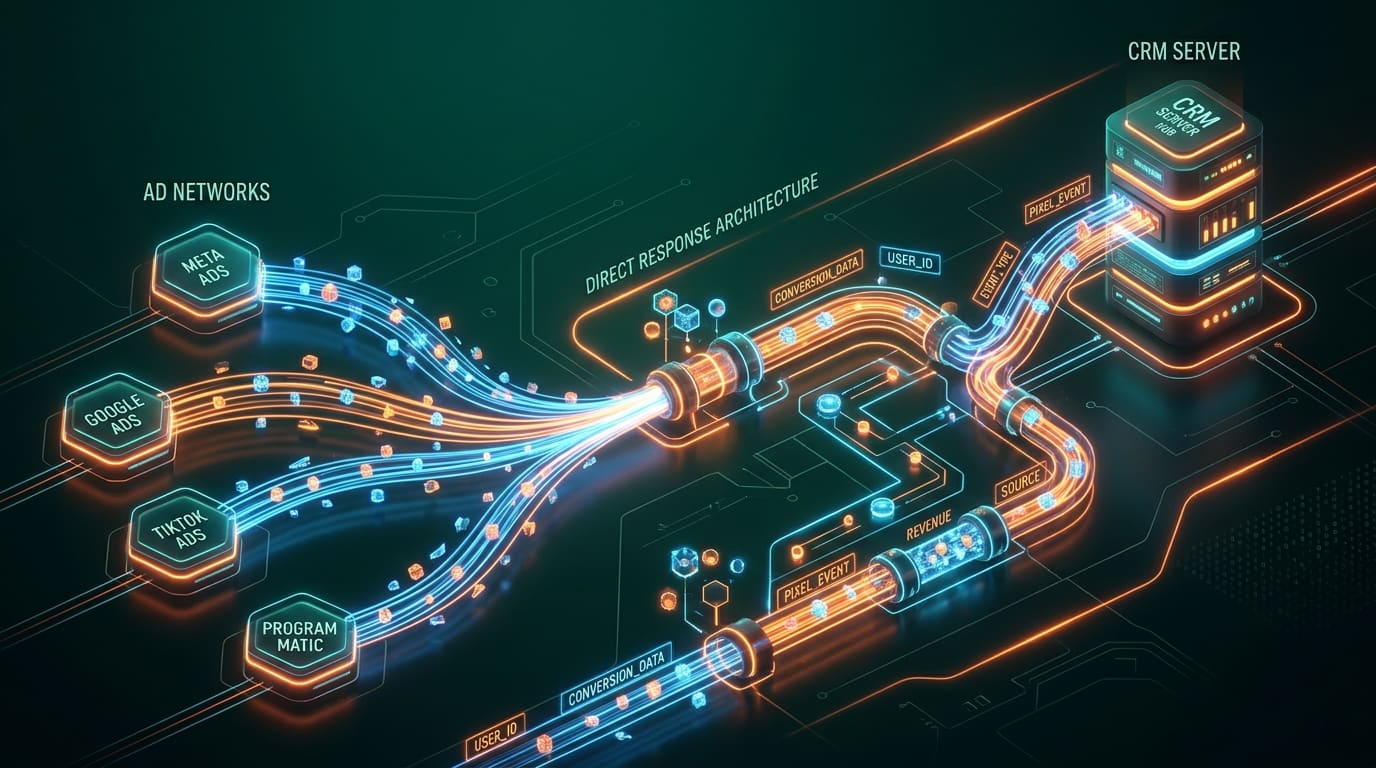
1. Why the Browser Pixel Alone Fails in 2026
If your lead generation funnel still reports conversions only through the browser-side Meta Pixel, your ad account is making decisions on incomplete data. Between Safari's Intelligent Tracking Prevention, iOS App Tracking Transparency, ad blockers and consent banners, client-side pixels now miss 25% to 35% of real conversion events on cold paid traffic.
The damage is not just reporting. Meta's delivery system optimizes toward the events it can see. When a third of your booked calls are invisible, the algorithm learns from a biased sample and gradually drifts toward the cheapest, least qualified clicks. That is why so many lead gen accounts see cost per lead fall while cost per qualified lead climbs.
The fix is the Meta Conversions API (CAPI): sending conversion events from your server or CRM directly to Meta, with enough customer data to match each event back to the ad click that caused it. Across the 125+ lead generation funnels we track, switching to server-side events is the single highest-leverage change after speed-to-lead automation.
Optimize for the event closest to revenue that you can send at volume
A "Lead" event trains Meta to find form-fillers. A "Schedule" or "QualifiedLead" event sent from your CRM trains it to find people who actually book and show up. CAPI is what makes those downstream events available to the auction.
2. What the Meta Conversions API Actually Does
The Conversions API is a server-to-server connection between your systems and Meta. Instead of the user's browser firing a Lead event, your CRM, backend or middleware sends an HTTP request to Meta's Graph API containing:
- The event name and time (for example
Scheduleat the moment a call is booked). - Customer information parameters hashed with SHA-256: email, phone, first name, last name, city, zip, country.
- Browser identifiers captured at form submission:
fbc(click ID) andfbp(browser ID). - An event_id that matches the pixel event so Meta can deduplicate.
- Optional custom data such as lead score, deal value or service type.
Because the request comes from your server, it cannot be blocked by browser privacy controls. Because it comes from your CRM, it can fire days later when the lead qualifies, books, shows up or pays, which the pixel can never do.
3. The Lead Gen Event Map: Lead, Qualified, Scheduled, Won
Most lead gen accounts send one event. High-performing accounts send a ladder of events that mirror the CRM pipeline. This is the map we deploy on every funnel and automation build:
| Pipeline Stage | Meta Event | Source | Use As Optimization Event? |
|---|---|---|---|
| Form submitted | Lead |
Pixel + CAPI (deduplicated) | Only in week 1 while volume builds |
| AI agent or SDR confirms budget and timeline | QualifiedLead (custom) |
CRM workflow via CAPI | Yes, once 50+ per week |
| Call booked on calendar | Schedule |
CRM workflow via CAPI | Primary target for most accounts |
| Call attended | Contact or custom ShowedUp |
CRM via CAPI | Secondary signal |
| Contract signed / payment collected | Purchase with value |
CRM or payment processor via CAPI | Yes for value-based bidding at scale |
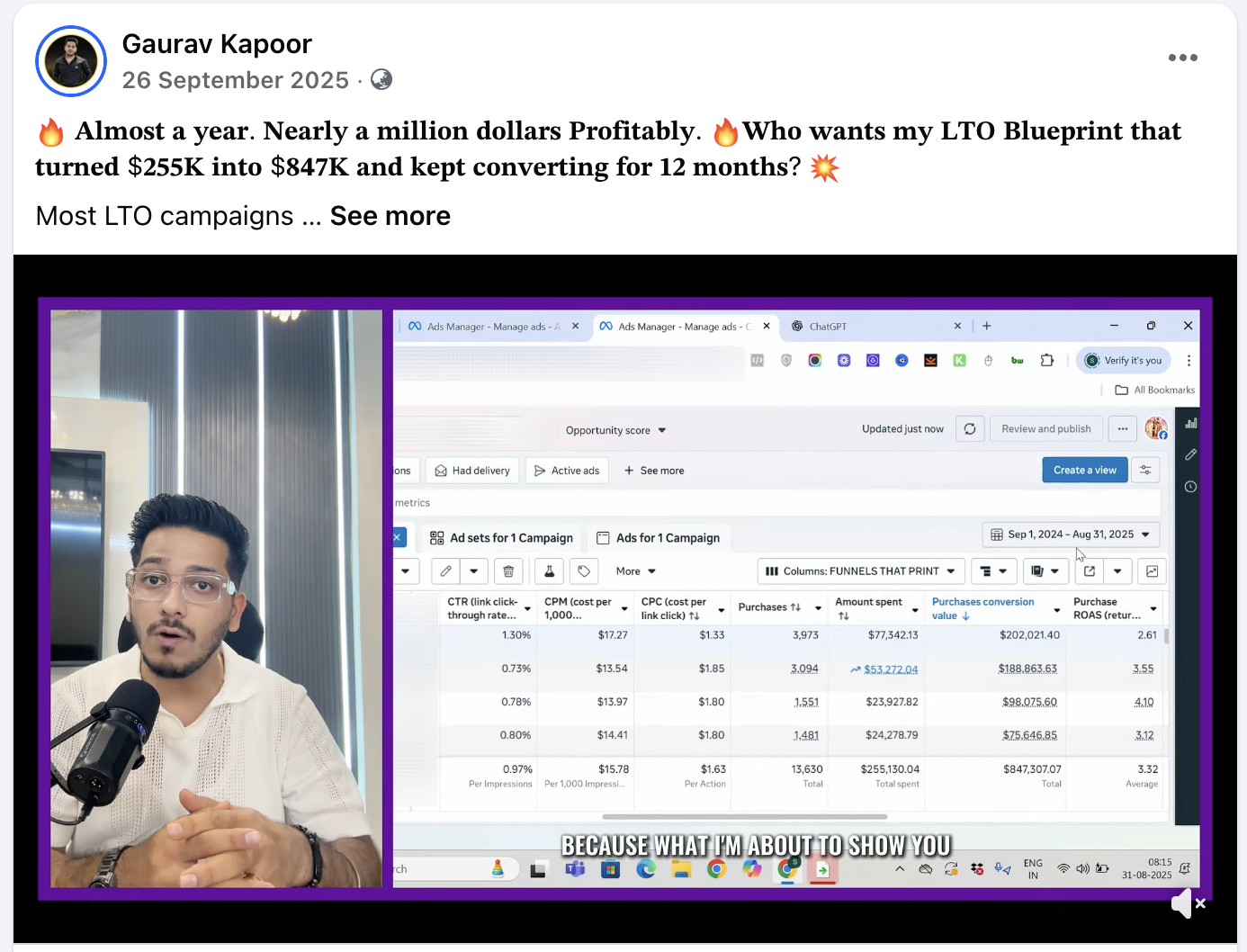
This exact ladder is what allowed the $1.52M high-ticket consulting funnel to scale past $40K per month in ad spend without lead quality collapsing. Meta was being fed closed-won revenue, not form fills.
4. Step-by-Step CAPI Setup for a CRM-Driven Funnel
Capture fbc, fbp and the full contact record at opt-in
Add hidden fields to your form that read the _fbc and _fbp cookies plus the landing URL. Store them on the contact record in your CRM. Without these, server events match on email and phone only, which caps your match quality.
Generate an access token and dataset ID in Events Manager
In Meta Events Manager, open your pixel (now called a dataset), go to Settings, and generate a Conversions API access token. Note the dataset ID. These are the only two credentials you need.
Fire the Lead event from both pixel and server with a shared event_id
On form submit, generate a unique ID, pass it to the pixel's fbq('track','Lead',{},{eventID}) call and to the server event's event_id. Meta keeps one and discards the duplicate.
Trigger downstream events from pipeline stage changes
Build a CRM workflow: when a contact moves to "Booked", send a Schedule event via CAPI with hashed email, phone, name, fbc, fbp and the original event time. Repeat for "Qualified" and "Won".
Verify in Test Events, then switch the optimization event
Use the Test Events tab to confirm each event arrives with a match quality score. Once you see 50 or more Schedule events in a 7-day window, change your campaign's conversion event from Lead to Schedule. Expect a 7 to 14 day learning reset.
5. Raising Event Match Quality Above 8
Event Match Quality (EMQ) is Meta's 1 to 10 score for how well your server events can be matched to real accounts. It is the single number that decides whether CAPI helps or just adds noise. Here is what moves it:
- Email (hashed): baseline. Alone it usually scores 5 to 6.
- Phone number (hashed, E.164 format): the biggest single lift for lead gen, since most Meta accounts are tied to a mobile number.
- fbc and fbp: the click and browser IDs that tie the event to the specific ad impression.
- First name, last name, city, state, zip, country (hashed): each adds a fraction of a point.
- Client IP address and user agent: pass through from the original submission when possible.
Normalize before hashing: lowercase and trim emails, strip spaces and punctuation from phones, remove leading zeros where the country code is present. A badly formatted phone hash matches nothing.
6. Mirroring the Setup in Google Enhanced Conversions
The same event ladder should be sent to Google Ads through Enhanced Conversions for Leads. The mechanics are nearly identical: capture the gclid at opt-in, store it on the contact, then upload or send offline conversions when the lead books or closes, keyed by gclid or by hashed email and phone.
Once both platforms receive booked-call and closed-won events, you can compare true cost per booked call across channels instead of comparing cost per form fill, which is where most budget allocation mistakes come from.
7. The 7 Mistakes That Break CAPI Attribution
- No deduplication. Pixel and server both fire Lead without a shared event_id, doubling reported leads and corrupting cost per lead.
- Sending events hours late. The
event_timeshould be the actual time of the action. Events older than 7 days are dropped for attribution. - Hashing already-hashed data or sending raw, unhashed PII, both of which fail silently.
- Optimizing for Schedule too early. Under 50 events a week keeps the ad set stuck in learning.
- Losing fbc on multi-step funnels. If the quiz lives on a different subdomain than the booking page, the cookie may not carry over. Pass the click ID in the URL.
- No consent handling. In regions that require it, send the
data_processing_optionsflags rather than skipping the event. - Forgetting the value parameter. Purchase events without a value cannot be used for value-based bidding, which is how low-ticket funnels like our $847K self-liquidating offer scale profitably.
If you would rather have this installed and verified for you alongside the funnel itself, our build packages include server-side tracking as standard. Book a strategy call and bring your Events Manager login.
Frequently Asked Questions
Do I still need the Meta Pixel if I set up the Conversions API?
Yes. Run both. The browser pixel captures click IDs (fbc) and browser IDs (fbp) that the Conversions API then uses to match server events to the original ad click. Send the same event_id from both sources so Meta deduplicates them instead of double counting.
What is a good Event Match Quality score for lead generation?
Aim for 8 or higher on your optimization event. Scores below 6 usually mean you are only sending an email hash. Adding hashed phone number, first and last name, city, zip, plus fbc and fbp typically moves a lead gen account from the 5 to 6 range into the 8 to 9 range.
How long after sending offline events does Meta improve lead quality?
Most lead gen accounts see cost per qualified lead stabilize within 14 to 21 days once the optimization event is switched from Lead to a downstream event like Schedule or QualifiedLead. The ad set needs roughly 50 of the new events per week to exit the learning phase.
Can I send CAPI events from GoHighLevel or HubSpot without a developer?
Yes. Both platforms support native or workflow-based Conversions API connections. A workflow triggered on a pipeline stage change can fire the event with the contact's hashed email and phone. For custom values such as deal size, a lightweight middleware step is usually added.

Rahul Kapoor
Co-founder of Funnels That Print and lead on CRM automation, speed-to-lead systems, AI voice calling agents and server-side tracking. Rahul has built the GoHighLevel workflows, Meta Conversions API pipelines and reminder automations behind 275+ client funnels.
Meet the team ↗