1. The Anatomy of a VSL Funnel
The vsl funnel examples below are broken down the same way: the pages in order, the beats in the video, the application or checkout step, and the follow-up. Four are real client builds from our case studies with their numbers. Two are reusable patterns, labeled as patterns because they are not tied to one client result.
Every VSL funnel has four layers. If you are new to the format, the VSL glossary entry covers the basics.
- The ad, which makes one promise and sends cold traffic to the video.
- The VSL page: headline, video, a few proof points and one button.
- The next step: an application and calendar for high-ticket offers, or a checkout for low-ticket offers.
- Follow-up: instant contact, reminders and tracking that tells the ad platform which viewers became buyers.
The video gets the attention, but in our builds the biggest gains usually came from layers three and four. You can see how we approach all four on our VSL funnel service page.
One more point before the examples: a VSL funnel is not only for high-ticket offers. The same video-led argument works on a checkout page for a $27 product and in a scheduled webinar for a coaching program. What changes from one example to the next is the length of the video and what the viewer is asked to do afterwards, which is why we break down each step separately.
2. High-Ticket Consulting: $1.52M in 19 Months
Type: real client build, high-ticket consulting.
Before: a strong offer with inconsistent conversion on cold traffic, attribution leaks and manual follow-up that let qualified leads slip away.
Page by page:
- Ad: cold Meta traffic with a single outcome-led promise.
- VSL page: a mechanism-led video sales letter with the call to action below it.
- Application: qualification filters on revenue, timeline and fit, so only qualified prospects reached the calendar.
- Booking and follow-up: automated multi-touch follow-up across channels before the call.
- Tracking: full attribution and Meta Conversions API events for qualified calls and sales.
Result: $1.52M collected over 19 months. Lesson: the video sold the program, but qualification and follow-up kept the calendar full of the right people.
3. Coaching VSL Into Application: $680K
Type: real client build, coaching.
Page by page: an ad into a VSL page, a short application, a calendar for qualified applicants, and confirmation plus reminder messages before the sales call.
Script beats: a hook naming the result, the reason past attempts failed, the mechanism, client proof, who the program is and is not for, and an invitation to apply.
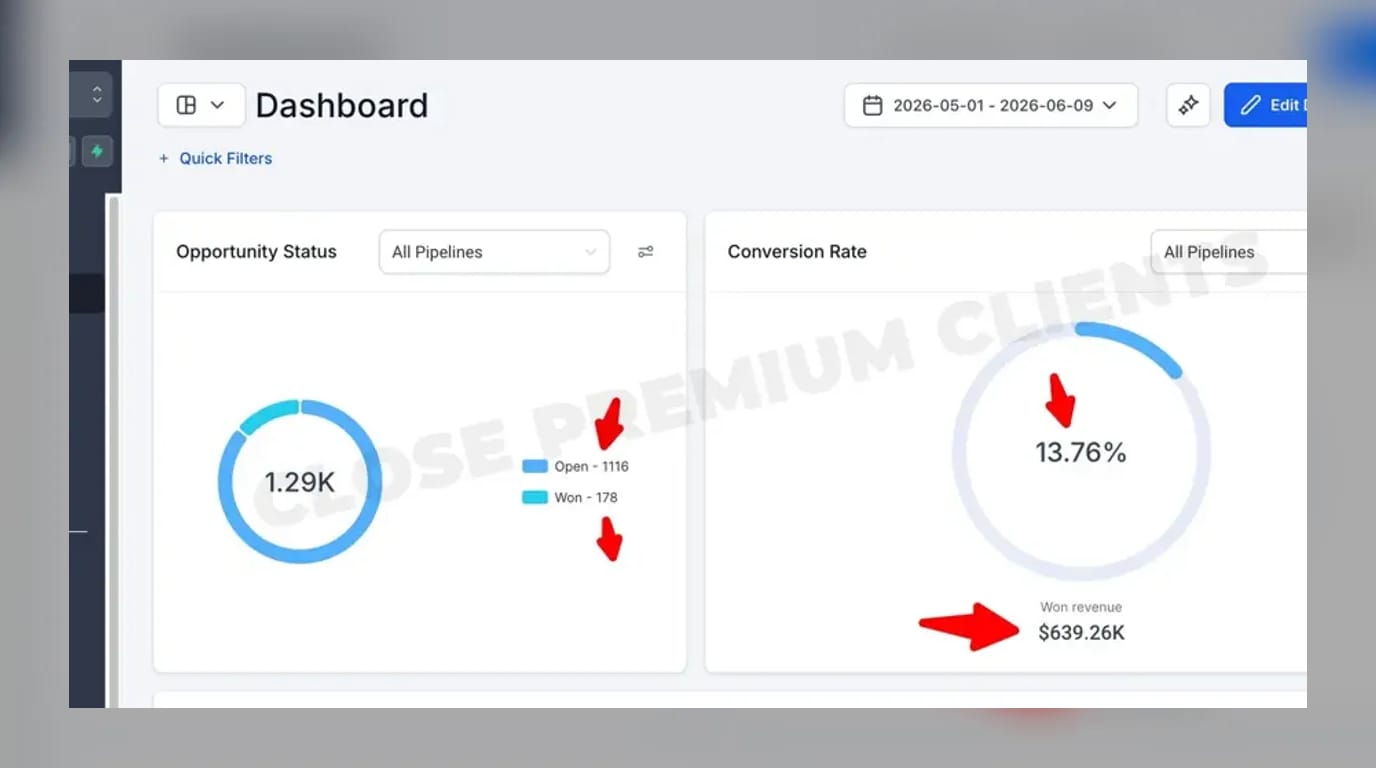
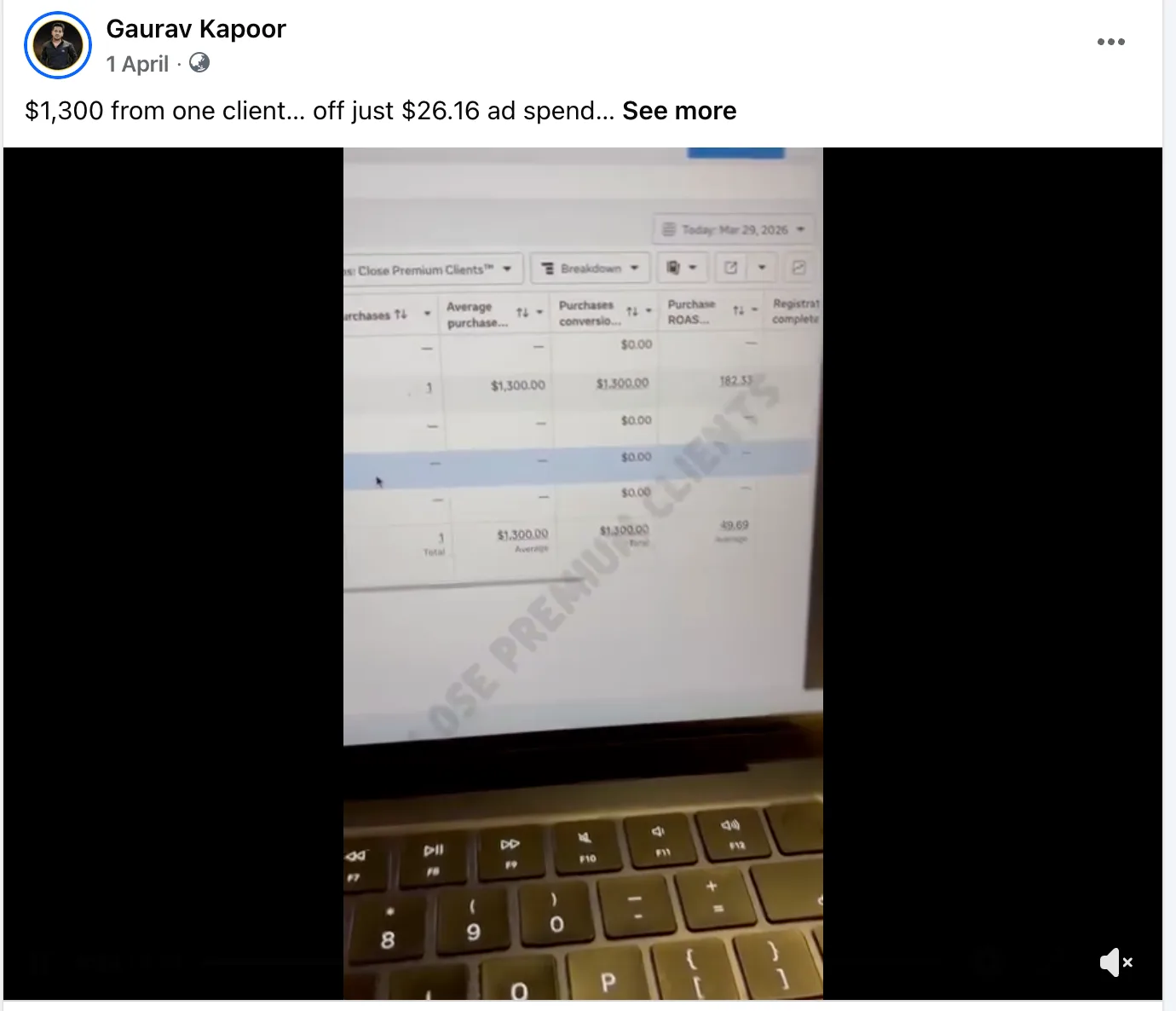
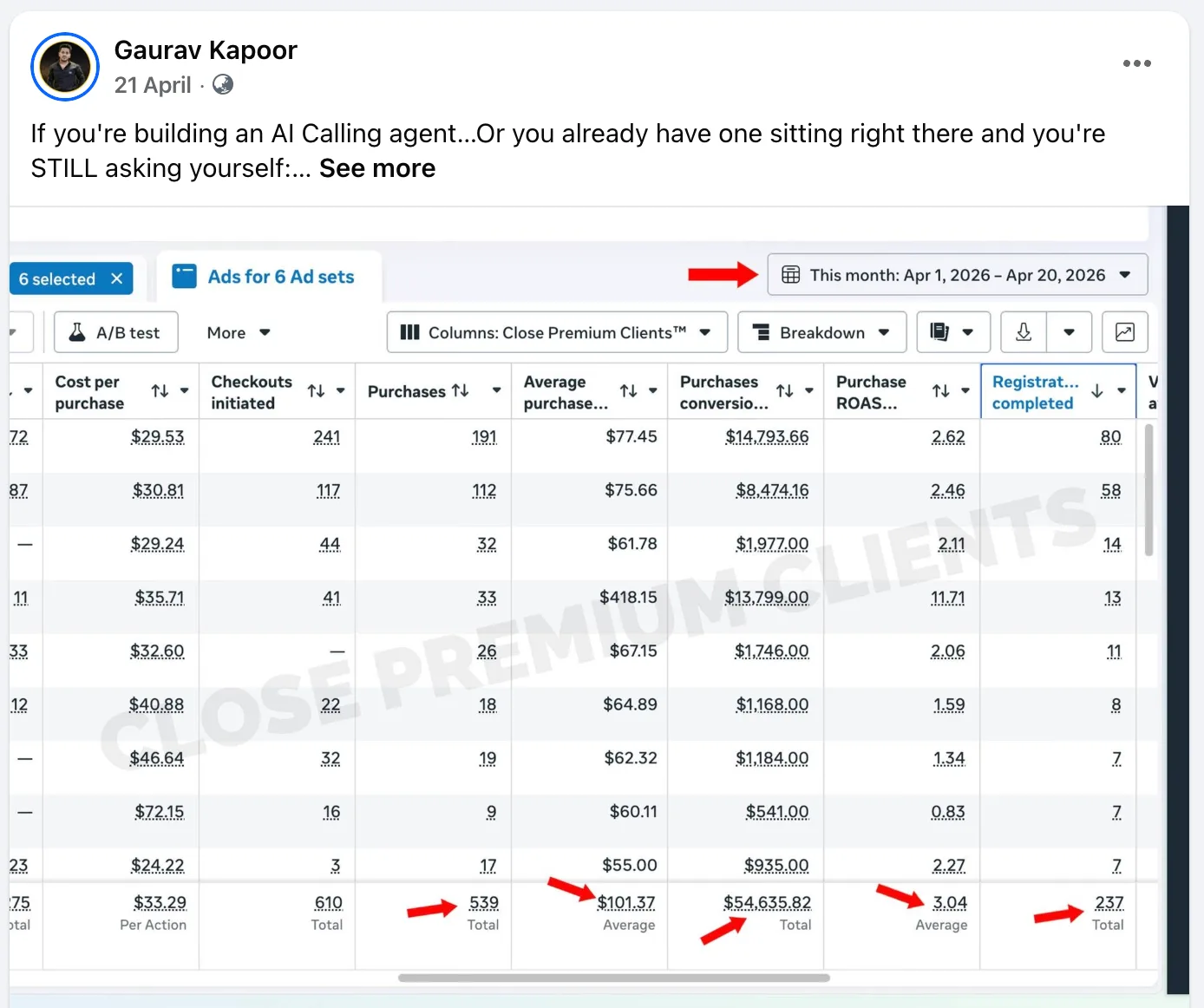
Result: $680,125 in revenue from 34 sales on $15,483 of ad spend. Another coaching build produced 174 appointments and $115,500 on $2,214.
Lesson: at high prices, few sales carry the whole funnel. An application that screens for budget protects the closer's time. More builds are on the coaching and consulting case studies hub.
4. Webinar as a Long-Form VSL: 29.7x
Type: real client build, coaching webinar.
Page by page: a registration page, a confirmation page, email and text reminders, the training itself, and a booking calendar for application calls at the end.
Script beats: the same beats as a VSL, stretched out with more teaching in the middle. The pitch comes after the audience has had a real win from the content.
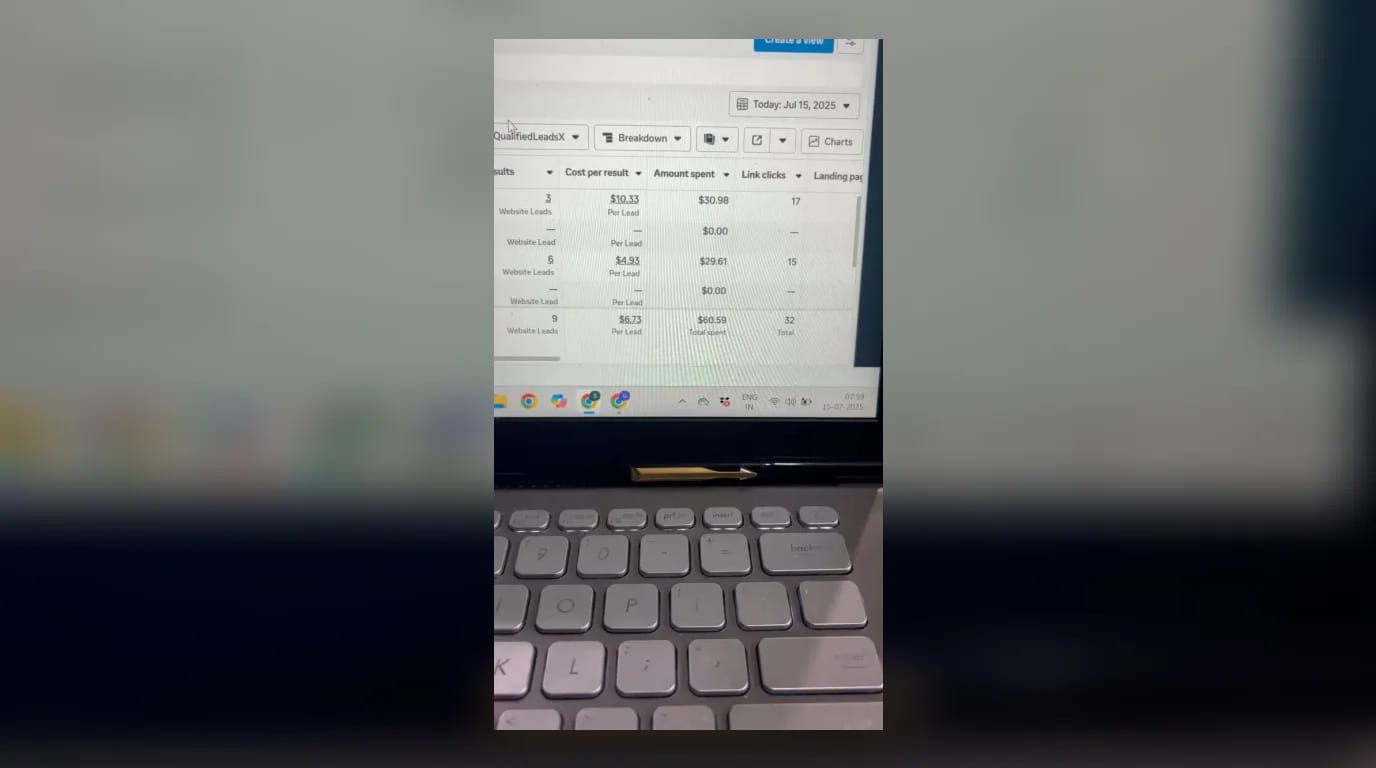
Result: $64,960 in revenue and 140 appointments on $2,184 of ad spend, a 29.7x return.
Lesson: when an offer needs more teaching than a 15-minute video allows, a webinar is a long-form VSL with a scheduling step. Attendance reminders matter as much as the content. Our VSL funnel vs webinar funnel comparison covers when to choose which.
5. Low-Ticket VSL Checkout: $847K
Type: real client build, coaching and info-product front end.
Before: the business was stuck chasing high-ticket sales with no profitable front end to pay for ads.
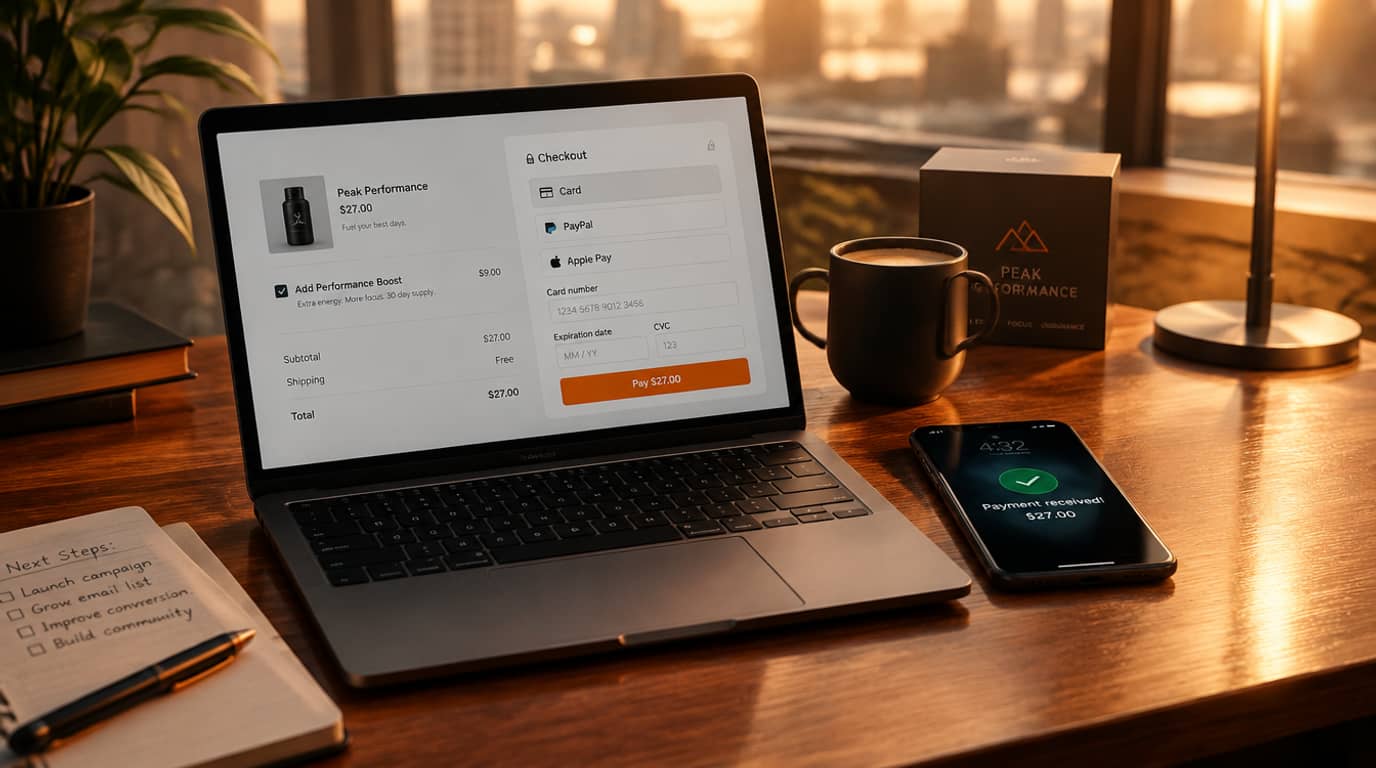
Page by page: an ad into a sales page for a $27 product, a two-step checkout with a $17 order bump, a one-click upsell and a thank-you page that seeded the high-ticket backend.
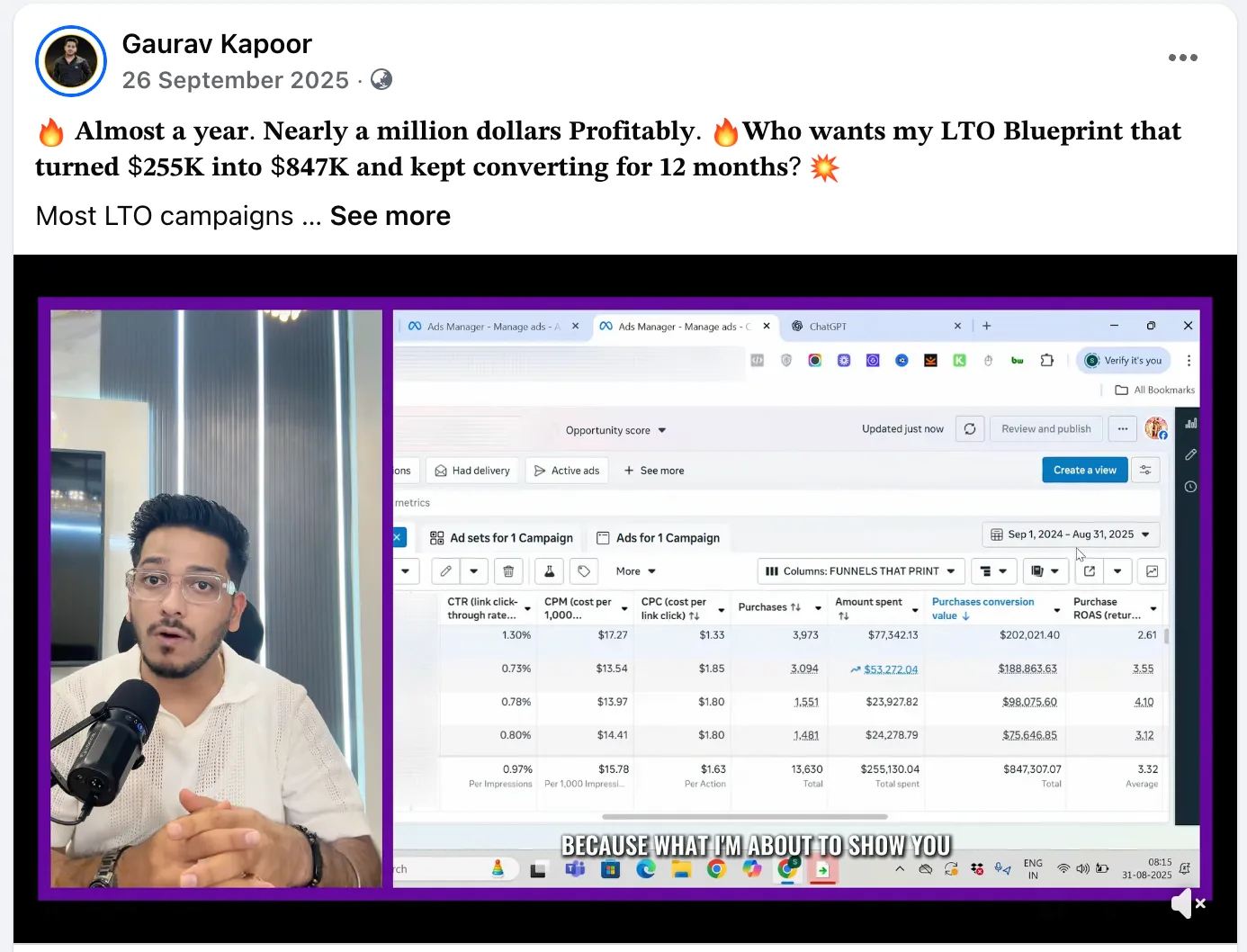
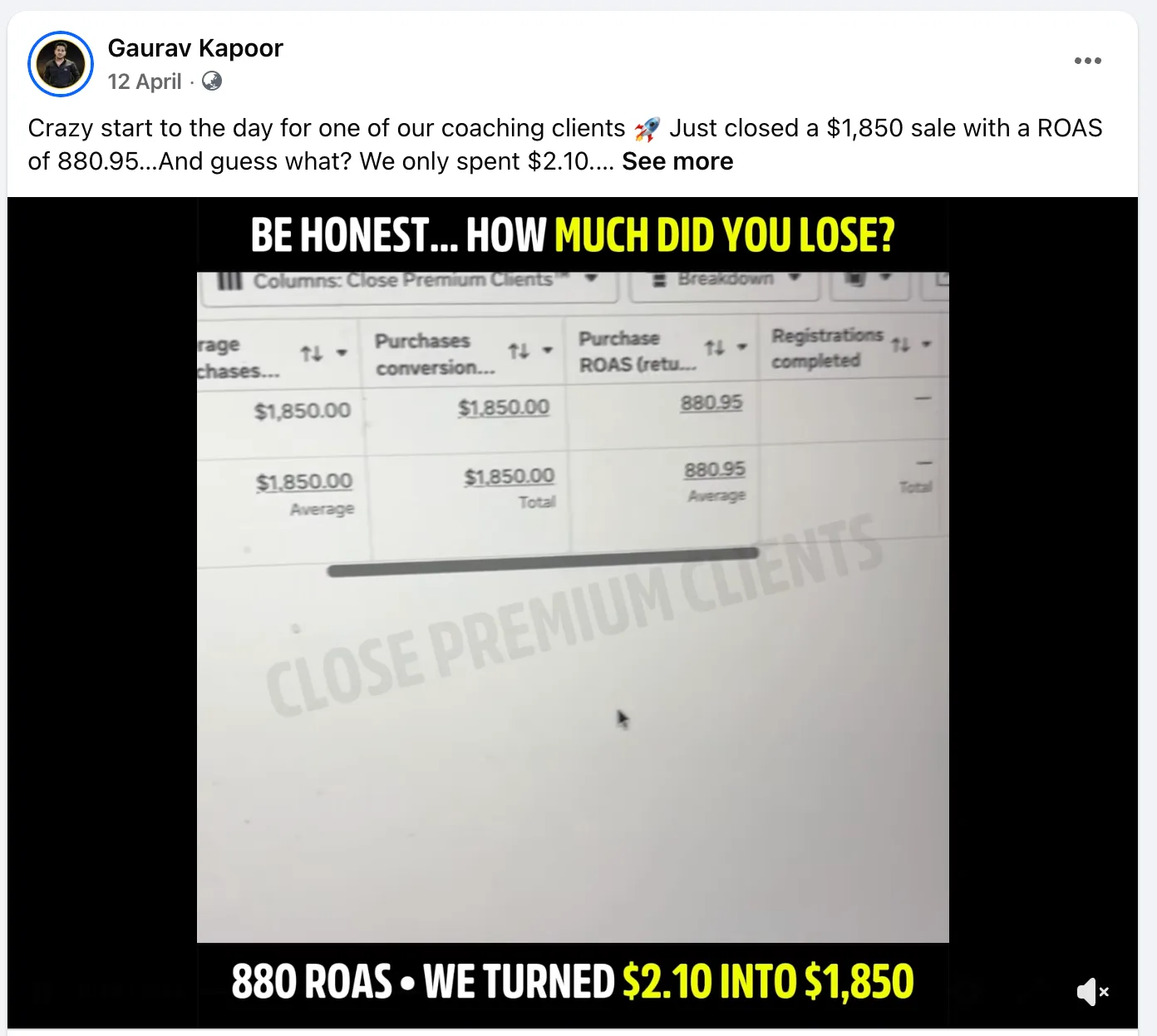
Result: $847,307 collected on $255,130 of ad spend at 3.32x ROAS, with 13,630 buyers and 112% of ad spend recovered on day zero.
Lesson: at low prices the video and page must sell in one sitting, and average order value decides whether the funnel scales. We break down the numbers in the $847K self-liquidating offer breakdown.
6. Two Reusable Patterns (Not Client Builds)
These are patterns we use when scoping, not client results. Measure your own numbers before you scale them.
Quiz first, VSL on the result page
A short diagnostic captures and qualifies the lead, then a four to six minute bridge video on the result page explains the mechanism before the calendar. It suits cold traffic that will not watch a long video before giving any information. Our quiz funnels often use this hybrid.
Local service explainer VSL
A 90-second video from the owner on a lead page for a higher-value local service, such as solar or a cosmetic procedure, followed by a short form and an instant call. The video builds trust before the form; the speed of the call does the rest.
7. The Script Beats Every Example Shares
Length and production quality varied across these builds. The order of the argument did not.
| Beat | Job | Common mistake |
|---|---|---|
| Hook | Name the outcome and who it is for in the first seconds | Opening with a long personal story |
| Problem | Explain why past attempts failed | Blaming the viewer |
| Mechanism | Show the new way and why it works | Listing features instead of a reason |
| Proof | Specific results with numbers | Vague testimonials |
| Offer | What they get, what it costs, what happens next | Hiding the next step |
| Qualification | Who it is not for | Inviting everyone to book |
| Call to action | One button, repeated | Several competing links |
Our free VSL script template walks through each beat with prompts and examples.
8. Application and Booking Steps
Most VSL funnels lose more buyers after the video than during it. The steps that protected revenue in our builds:
- A four to six question application covering current situation, goal, timeline and ability to invest. Our lead qualification questions template lists the ones we use.
- Calendar only for qualified applicants, with a polite resource page for everyone else.
- Instant contact. Across 60+ deployments our speed-to-lead layer had a median first contact of 38 seconds and lifted lead-to-booking 2.4x.
- Three-channel reminders by SMS, email and call, which took show-up rates up to 88%.
- Server-side tracking through the Meta Conversions API, which recovered 31% more events in our builds.
Each of these steps is small on its own. Together they decide how many of the people your video convinced actually end up on a call or in a checkout.
9. Common VSL Funnel Mistakes
When we audit VSL funnels that are not working, the video is rarely the only problem. These are the issues we find most often:
- A slow opening. If the first 30 seconds do not name the outcome and the audience, most cold viewers leave before the argument starts. Check the retention curve before reshooting anything else.
- Too many exits on the page. Navigation menus, social links and several buttons pull viewers away. A VSL page needs one action.
- No qualification. A calendar open to everyone fills with people who cannot buy, and closers burn out on bad calls.
- A gap between booking and the call. Calls booked three or more days out without reminders are the ones that no-show. Our no-show reminder sequence closes that gap.
- Pixel-only tracking. If the ad platform only sees page views and opt-ins, it optimizes for viewers, not buyers. Send qualified-call and sale events back.
- Judging too early. High-ticket funnels need weeks of data because closes lag ad spend. Agree a test budget and timeline before launch.
10. Which Example Should You Copy?
Match the example to your price and buying process rather than to whatever looks most impressive:
- You sell a high-ticket service or program and can take calls: copy the consulting or coaching structure, with a VSL, a short application and a protected calendar.
- Your offer needs real teaching before people understand it: copy the webinar structure and invest in attendance reminders. Our webinar funnels page covers the build.
- You sell a product under about $50: copy the low-ticket structure, where checkout, order bump and upsell matter as much as the video.
- Your cold traffic will not watch a long video: start with the quiz-first pattern and move the video to the result page.
For more formats, see the sales funnel examples roundup or our guide on how to build a high ticket funnel. When you are ready, book a strategy call; a complete VSL funnel goes live in 5 to 10 business days.
Results from this playbook
Verified client results built on the system in this article, with the numbers from the ad account and CRM.
- $64,960RevenueWebinar Funnel Case Study: $65K Revenue on $2,184 Ad Spend
- $115,500RevenueCoaching Funnel Case Study: $116K Revenue on $2,214 Ad Spend
- $57,577.57RevenueLow-Ticket Funnel Case Study: $58K Revenue on $23K Ad Spend
- 132SalesLow-Ticket Funnel Case Study: 132 Sales
All coaching, consulting & webinar funnel case studies · All low-ticket funnel case studies
Frequently Asked Questions
What is a VSL funnel?
A VSL funnel uses a video sales letter as the main selling tool. Traffic from an ad lands on a page with the video, then moves to an application, a booking calendar or a checkout. Follow-up texts, calls and reminders protect that next step. It suits offers that need explanation before someone is ready to buy.
How long should a VSL be?
As long as the offer needs, and no longer. High-ticket mechanism videos often run 10 to 20 minutes for cold traffic, while a bridge video on a quiz result page can work at 4 to 6 minutes. Low-ticket product videos are usually shorter. Watch retention data and cut the sections where viewers drop off.
Should a VSL funnel use an application or a direct calendar?
Use an application when sales calls are expensive and you need to screen for budget, timing and fit. Use a direct calendar when lead volume is low and every conversation is worth having. Most of our high-ticket builds use a short application of four to six questions, followed by the calendar for qualified applicants only.
Can a VSL funnel work for low-ticket offers?
Yes. A short video on the sales page can explain a $27 product as well as a long letter, and the checkout, order bump and upsells do the rest. Our $847K low-ticket front end paired the offer with a two-step checkout and fixed tracking, turning $255,130 of ad spend into $847,307 at 3.32x ROAS.
What is the difference between a VSL funnel and a webinar funnel?
A VSL is short and available on demand the moment someone clicks. A webinar is longer, often scheduled, and needs registration and attendance reminders. Webinars suit offers that need teaching; VSLs suit offers where a tighter argument is enough. Our comparison page covers the trade-offs, costs and conversion points in detail.
How much does it cost to build a VSL funnel?
With Funnels That Print, a VSL funnel is a one-time fee: $999 for design only, $1,499 including copy and the full build, or $1,999 for the complete suite with CRM, automation, an AI booking agent and tracking. Builds go live in 5 to 10 business days. Video production and ad spend are separate.

Rahul Kapoor
Co-founder of Funnels That Print and lead on CRM automation, speed-to-lead systems, AI voice calling agents and server-side tracking. Rahul has built the GoHighLevel workflows, Meta Conversions API pipelines and reminder automations behind 275+ client funnels.
More from Rahul ↗