1. What a Self-Liquidating Offer Funnel Is (and Is Not)
A self-liquidating offer (SLO) funnel is a low-ticket sales funnel designed so that the money collected from the front-end purchase, its order bump and one or two upsells pays back the ad spend that produced the buyer. The business acquires a paying customer for free or at a small profit, then earns on the backend.
It is not a lead magnet with a product attached, and it is not a discount funnel. The front-end product has to be something a cold prospect would genuinely pay for in the next five minutes.
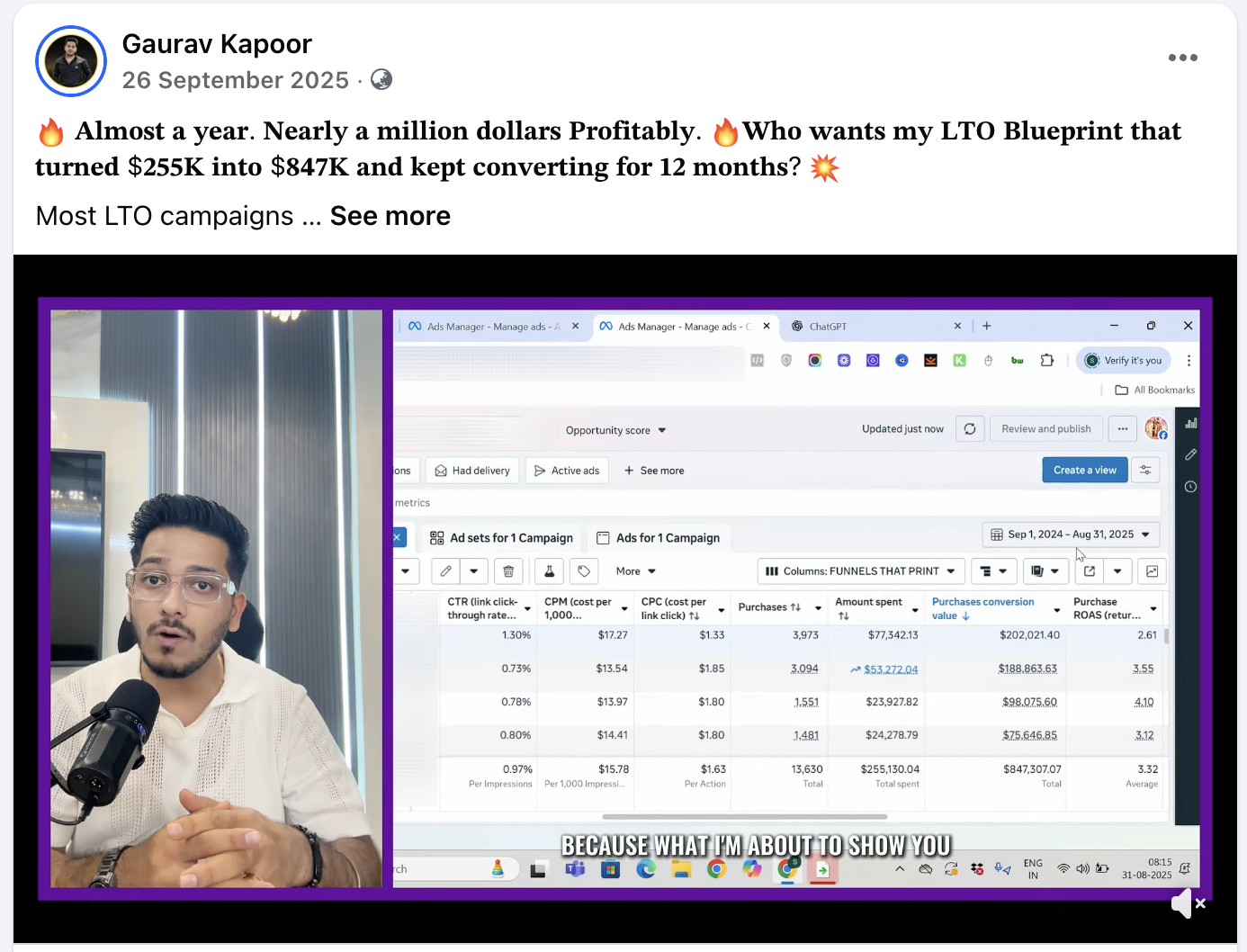
This article breaks down the structure behind our $847K low-ticket scaling system case study. The full page-by-page walkthrough and screenshots live on that page; here we cover the economics and the decisions that made it work.
2. The $27 Front Door: Choosing the Right Product
The front-end product was a $27 digital system: a set of templates plus a short implementation video. It passed the three tests we apply to every SLO front door:
- Immediate utility. The buyer could use it the same day. Courses that take weeks to consume make poor front doors.
- A natural next step. Using the product creates the desire for the backend offer, rather than satisfying it.
- Proof that fits in an ad. A single result screenshot was enough to make the $27 price feel like a steal.
Pricing at $27 rather than $7 or $47 was deliberate. At $7 the buyer list filled with people who would never buy the backend. At $47 the ad-to-purchase conversion rate dropped enough that the funnel stopped liquidating.
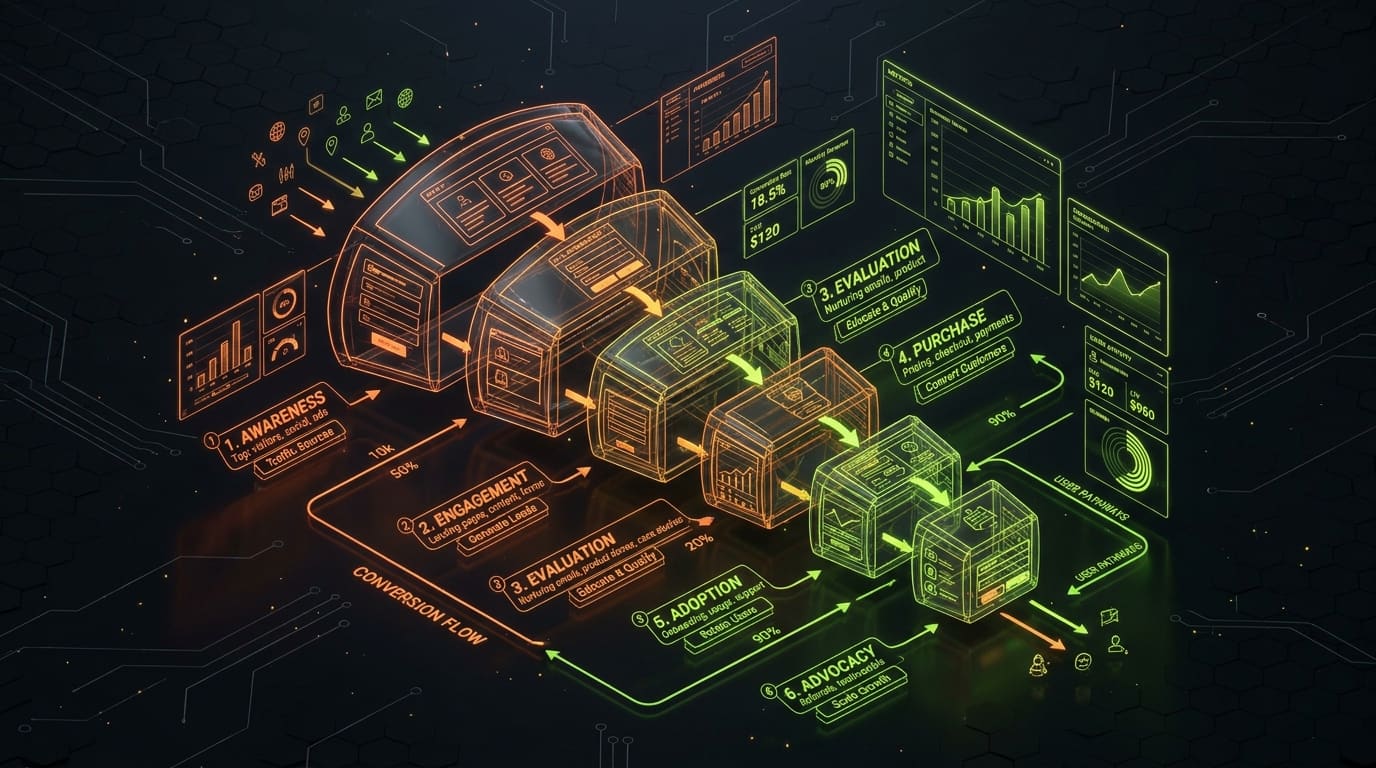
3. The 5-Page Sequence
Long-form sales page
Headline built on the result, a 4-minute video, stacked proof, a clear "what you get" section and the $27 price anchored against the $297 it replaces. Conversion rate from cold Meta traffic: 3.1% to 4.4% depending on the creative.
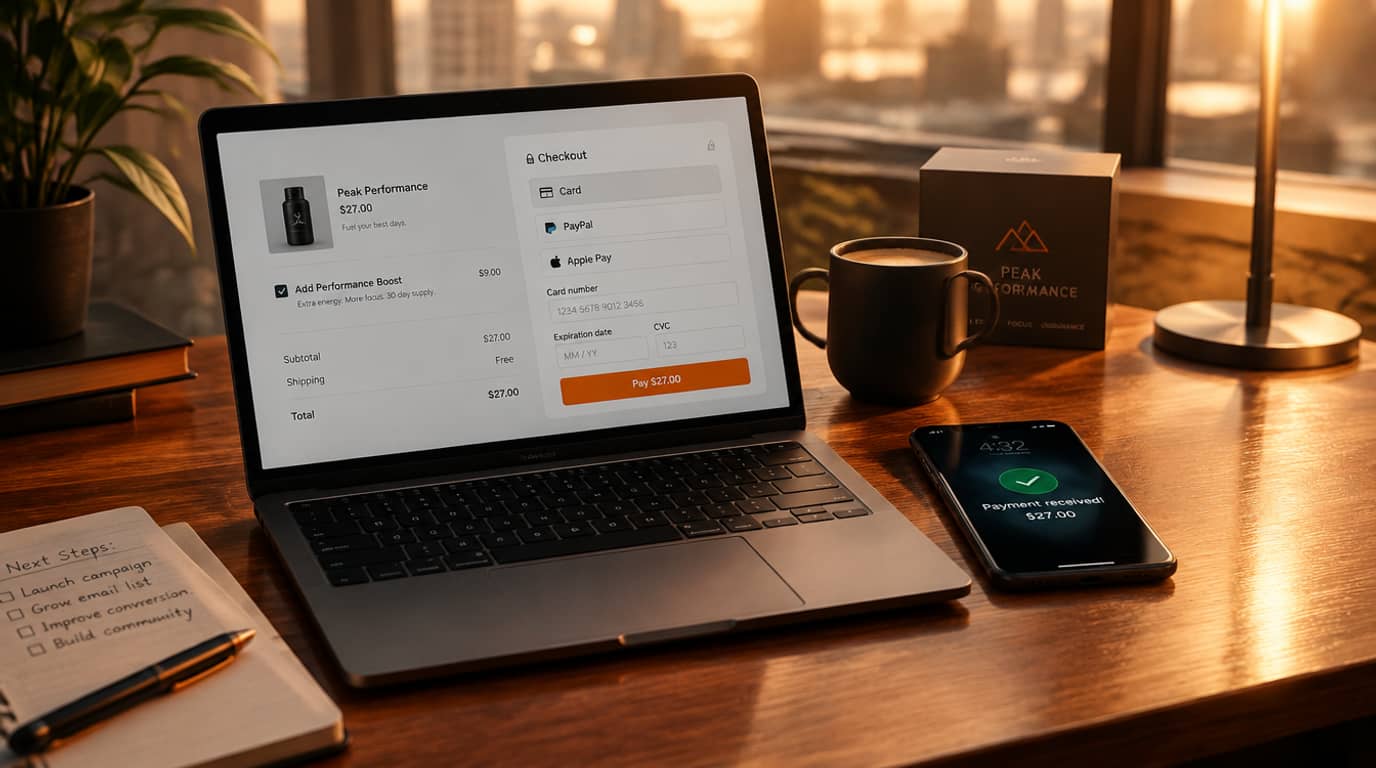
Two-step checkout with order bump
Contact details first, payment second, so abandoned carts could be recovered. A $17 order bump (a complementary swipe file) was ticked by 41% of buyers.
One-click upsell 1: $97 accelerator
A deeper version of the front end with done-for-you assets. Taken by 22% of buyers. No re-entering card details.
Downsell or upsell 2: $47 add-on
Shown to those who declined the $97 offer. Taken by 14% of that group.
Thank-you page with onboarding and backend seed
Delivered the product, set expectations for the email sequence, and introduced the high-ticket program without selling it yet.
If you are deciding between this structure and a high-ticket application model, our VSL vs. quiz funnel comparison explains when each wins.
4. Order Bump and Upsell Math: Getting AOV Above Cost Per Buyer
| Offer | Price | Take Rate | Revenue Per 100 Buyers |
|---|---|---|---|
| Front end | $27 | 100% | $2,700 |
| Order bump | $17 | 41% | $697 |
| Upsell 1 | $97 | 22% | $2,134 |
| Upsell 2 / downsell | $47 | 14% of decliners | $513 |
| Total | $6,044 ($60.44 AOV at launch, $68.40 after optimisation) |
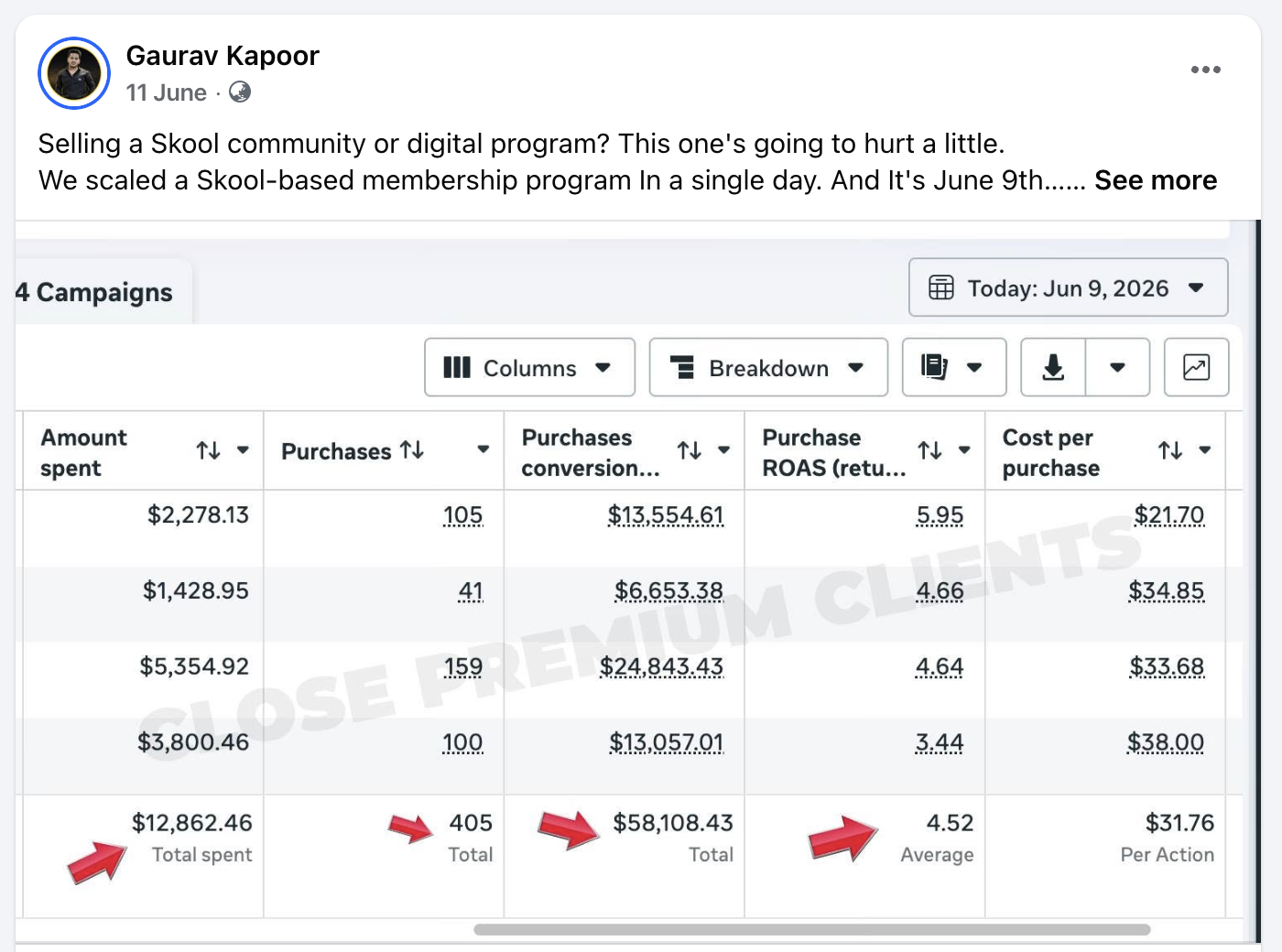
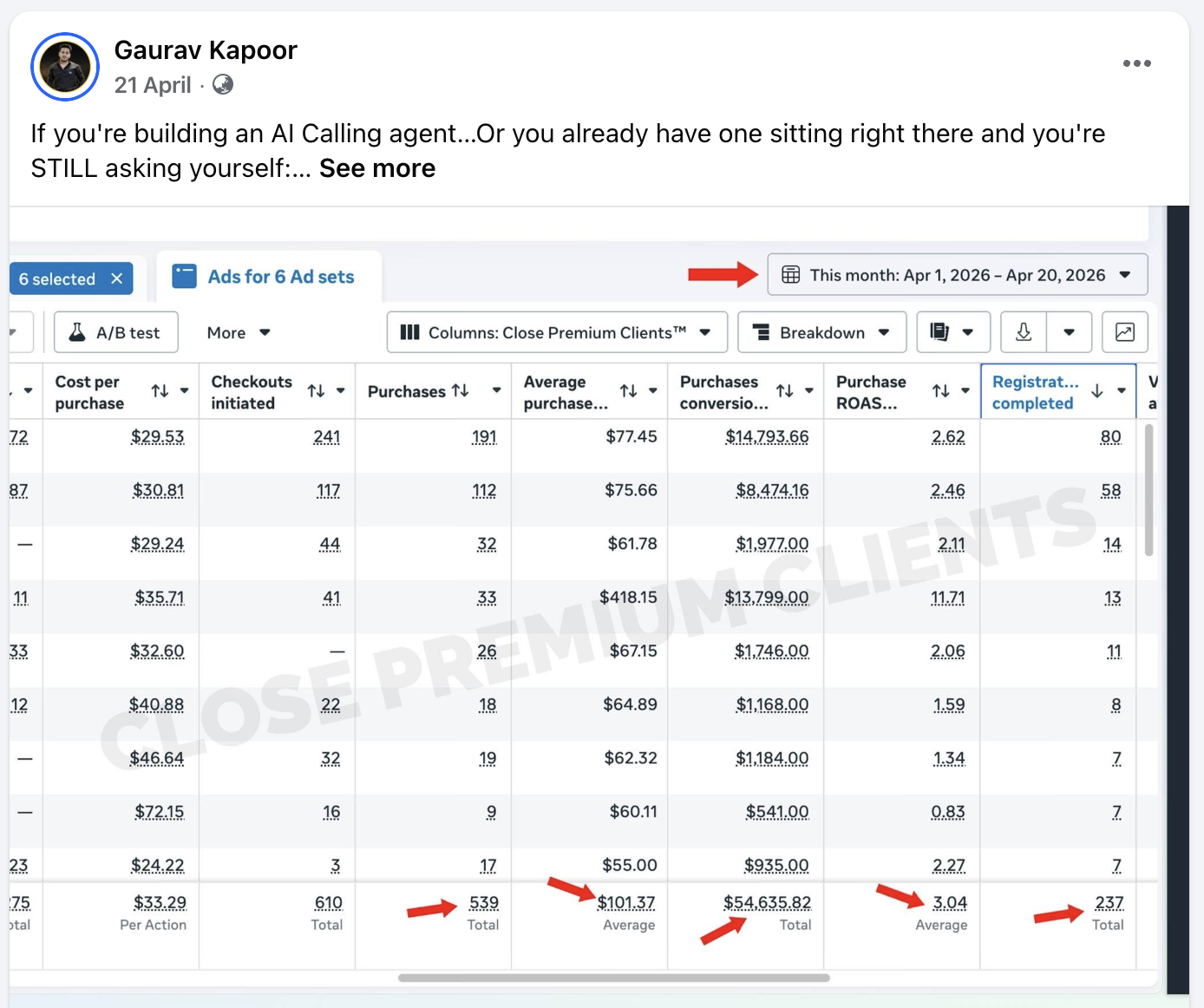
Cost per front-end buyer from Meta averaged $54.20. With an average order value of $60.44 at launch, the funnel recovered 112% of ad spend on day zero. Every improvement after that, from a stronger order bump headline to a video on the upsell page, went straight to margin.
5. The Backend: Where the Real $847K Came From
Front-end and upsell revenue accounted for roughly 38% of the $847,307 collected. The remaining 62% came from the buyer list:
- A 14-day email sequence that taught with the product, then invited buyers to a $997 program via a short application.
- A quarterly live workshop at $197, promoted only to buyers, which also fed the high-ticket program.
- A high-ticket done-with-you offer presented on a sales call to qualified applicants, using the same speed-to-lead automation we use for lead gen clients.
Buyers converted to the $997 program at 6.8%, roughly nine times the rate of a free opt-in list we ran in parallel. That ratio is the whole argument for leading with a paid product.
6. Tracking Purchases and Value Back to Meta
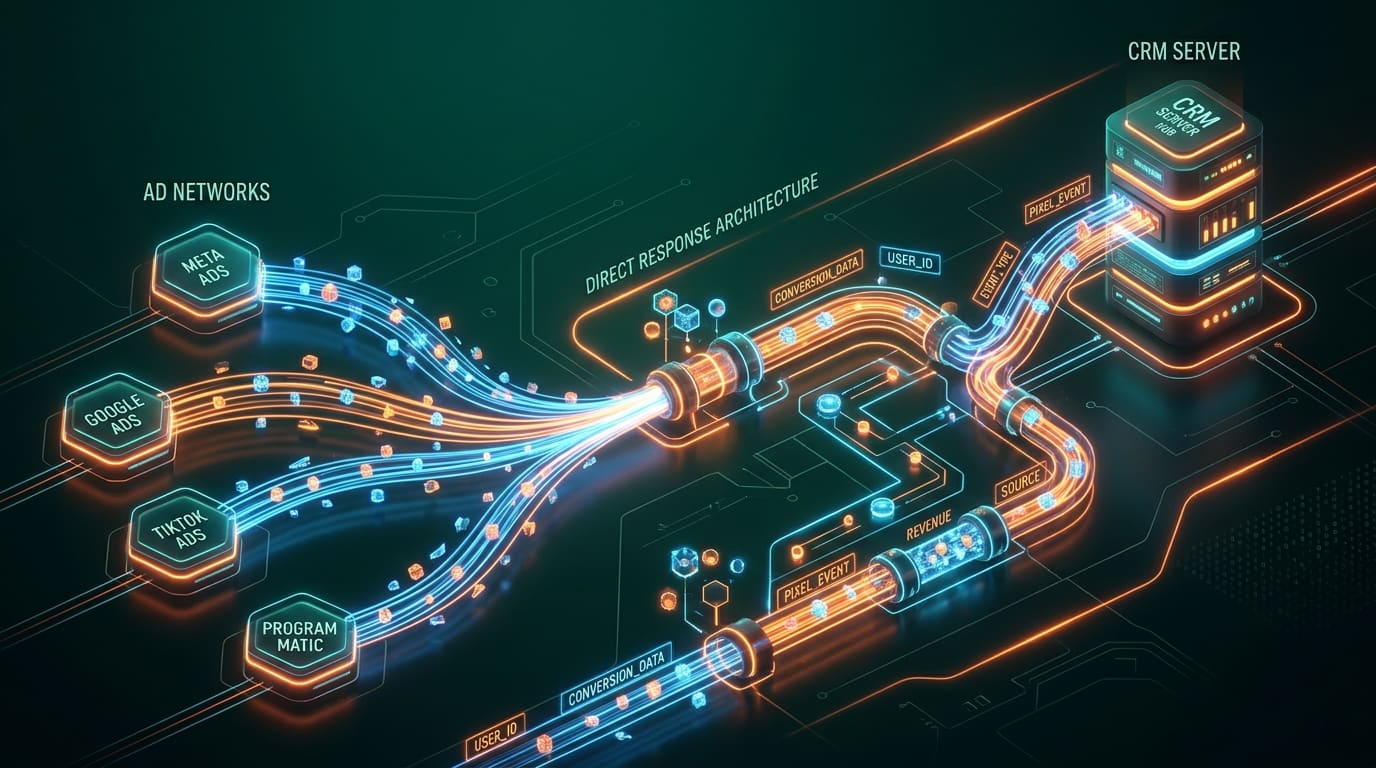
A low-ticket funnel lives or dies on value-based bidding. Every purchase, including bumps and upsells, was sent server-side as a Purchase event with its value, so Meta optimised toward buyers with higher order values rather than the cheapest $27 sale. The setup is covered in detail in our Conversions API guide. Backend program purchases were sent too, with a 7-day lag, which pushed the account toward audiences that resembled program buyers.
7. When an SLO Funnel Is the Wrong Choice
This model is not universal. It struggles when:
- The business has no backend offer to ascend buyers into, so the funnel only ever breaks even.
- The product needs a sales conversation to be understood, in which case an application funnel is more efficient.
- Margins on the backend cannot support a 60-day payback window while the email sequence does its work.
For local services and B2B offers above $3,000, the AI-qualified application funnel usually outperforms. If you are unsure which model fits your offer, see the breakdown of 126+ eCommerce funnels alongside our lead generation results, or book a strategy call and we will run the numbers with you.
Frequently Asked Questions
What does self-liquidating mean in a funnel?
It means the revenue from the front-end offer and its immediate upsells covers the cost of the advertising that produced the buyer. The goal is to acquire customers at break-even or better on day zero, so the backend offers are pure profit.
What is a good price for a low-ticket front-end offer?
Between $7 and $47 for cold traffic. Below $7 attracts low-intent buyers; above $47 needs more proof than a cold ad can deliver. Our best results cluster around $27 with a $17 to $27 order bump.
How is an SLO funnel different from a tripwire funnel?
They are closely related. A tripwire is usually a single low-priced product offered right after an opt-in. A self-liquidating offer funnel is designed from the start with order bumps and upsells so that total order value, not just the tripwire, pays for the traffic.
Can a service business use a self-liquidating offer?
Yes. A paid workshop, template pack, audit or mini-course works well as a front door, with the service itself or a high-ticket program as the backend. It builds a buyer list that is far more responsive than a free lead list.

Gaurav Kapoor
Founder of Funnels That Print. Since 2019 Gaurav has architected high-ticket and low-ticket acquisition funnels for coaching, consulting, home services, finance and DTC brands, including the $1.52M high-ticket consulting funnel and the $847K self-liquidating offer funnel documented on this site.
Meet the team ↗