1. What a Low Ticket Funnel Is
A low ticket funnel sells an inexpensive product, usually between $7 and $47, directly to cold traffic. Order bumps and one-click upsells lift the average order value until the front end pays for the ads that produced the buyer. When it works, you acquire customers at break-even or better on day zero and make your profit on what they buy next.
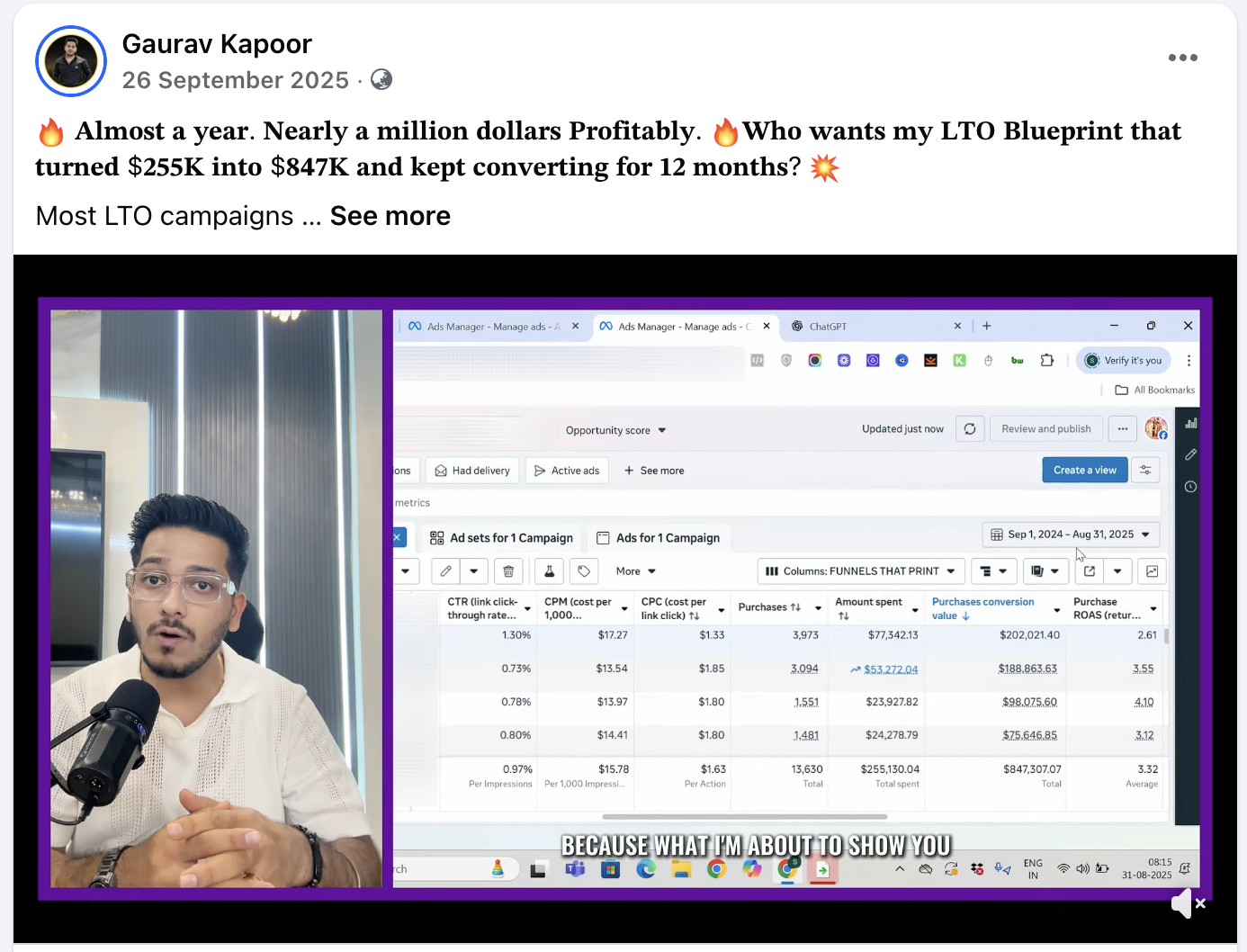
The best known version is the self-liquidating offer, where the funnel is engineered specifically to liquidate ad spend. Our $847K low-ticket case study is a textbook example: a $27 product, a $17 order bump, and 112% of ad spend recovered on day zero.
This guide covers how to plan one from scratch. For the detailed economics of that specific build, read the $847K self-liquidating offer breakdown.
2. Choosing the Front-End Product
The front-end product decides almost everything downstream. It should pass four tests:
- Immediate use. The buyer gets value the same day. Templates, swipe files, short trainings and toolkits work. Twelve-week courses do not.
- One clear problem. The product solves a narrow, painful problem completely, rather than a broad one partially.
- A natural next step. Using it should create demand for your main offer, not replace it.
- Provable in an ad. One screenshot, result or before-and-after should make the price feel obvious.
Communities and memberships can also work as front ends. Several of our low-ticket funnel case studies sold memberships, including one that sold 1,566 memberships. A low monthly price lowers the barrier, and retention becomes the backend.
A simple way to test product ideas before building anything: write the ad first. If you cannot describe the product, the result it delivers and why it is worth the price in a short ad, cold buyers will not understand it either. Then ask a handful of past customers or followers whether they would pay for it today. If the answers are lukewarm, change the problem the product solves rather than lowering the price. Cheaper rarely fixes an offer nobody wants; a sharper promise usually does. Finally, decide the backend offer at the same time, because the front-end product should lead straight into it.
3. Pricing: Why $7 to $47
Price is a filter as much as a revenue number. Too low and the list fills with people who will never buy again. Too high and cold traffic needs more proof than an ad can deliver, so conversion falls and the funnel stops liquidating.
| Price | Typical role | Trade-off |
|---|---|---|
| $7 to $17 | Impulse buy, high volume | Easy to sell; buyers can be lower intent |
| $27 | Our most common front end | Balances conversion and buyer quality |
| $37 to $47 | Higher-value toolkit or workshop | Needs stronger proof on the sales page |
In the $847K build, $27 was deliberate. Lower prices brought in buyers who rarely ascended, and higher prices cut conversion enough to break the day-zero math.
4. The Page Sequence
Sales page
Lead with the result, show proof early, explain exactly what the buyer gets, and anchor the price against the value. A short video helps. Our funnel copy template has the section order.
Checkout with an order bump
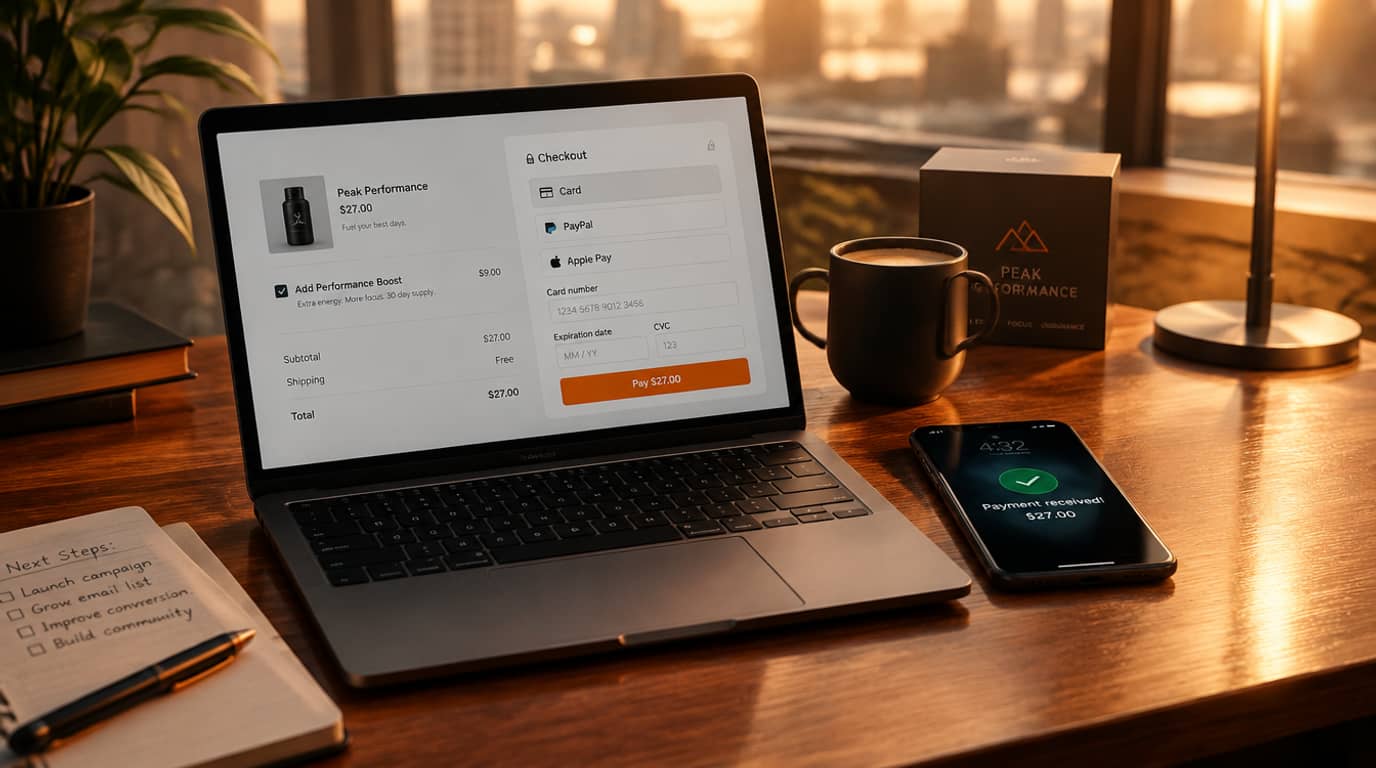
Use a two-step checkout, contact details then payment, so abandoned carts can be followed up. Add one order bump: a complementary item priced around half the front end, sold with a single checkbox.
One-click upsell
A deeper or faster version of what they just bought, usually a few times the front-end price, purchased without re-entering card details.
Downsell
A lighter version for those who declined the upsell. The upsell and downsell entry explains how to structure the pair.
Thank-you and onboarding
Deliver the product, tell buyers what to expect next, and introduce the backend without hard-selling it yet.
5. The Math: AOV vs Cost Per Buyer
One rule governs every low ticket funnel: average order value must be at least equal to cost per buyer. If it is, the funnel self-liquidates. If not, you are paying to acquire customers and need a backend that pays it back quickly.
AOV = front-end price + (bump price x bump take rate) + (upsell price x upsell take rate) + (downsell price x downsell take rate among decliners). Compare it with ad spend divided by number of buyers.
In the $847K funnel, average order value reached $68.40 after optimization, against a cost per buyer that made the front end recover 112% of spend on day zero. Every improvement after break-even, a sharper bump headline or a video on the upsell page, went straight to margin.
Use the ROAS calculator to see what return you need at your price points, and the funnel conversion calculator to test how bump and upsell take rates change the outcome.
6. A Worked Example: 100 Buyers
Here is how the take rates from our published $847K breakdown turn into revenue for every 100 front-end buyers:
| Offer | Price | Take rate | Revenue per 100 buyers |
|---|---|---|---|
| Front end | $27 | 100% | $2,700 |
| Order bump | $17 | 41% | $697 |
| Upsell | $97 | 22% | $2,134 |
| Downsell | $47 | 14% of decliners | $513 |
| Total | $6,044, or $60.44 average order value at launch |
Notice that the front-end product produced less than half of the revenue. The bump and upsells did the rest. That is why we spend as much time on the offers after the checkout button as on the sales page itself, and why a funnel with no bump or upsell almost never liquidates on cold traffic.
7. Tracking and Scaling
A low ticket funnel lives or dies on how well the ad platform understands who is buying. Send every purchase, including bumps and upsells, as a server-side purchase event with its value. That lets Meta optimize for buyers with higher order values rather than the cheapest sale. Our Conversions API setups recovered 31% more events than the pixel alone.
Scale in steps once the funnel is liquidating. Results from our clients show what is possible when the math holds:
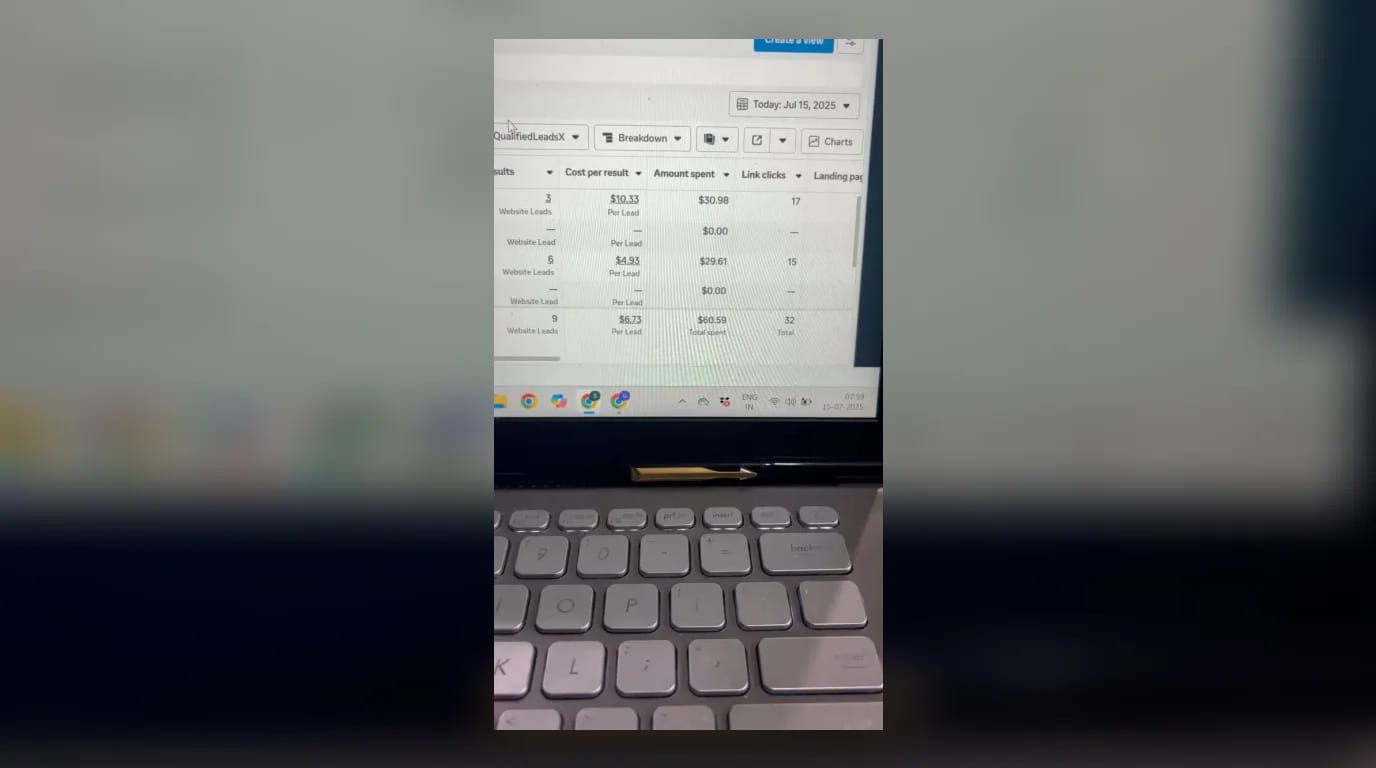
- 132 sales on $1,214.35 of ad spend at an 11.7x return, a small-budget test that proved the offer.
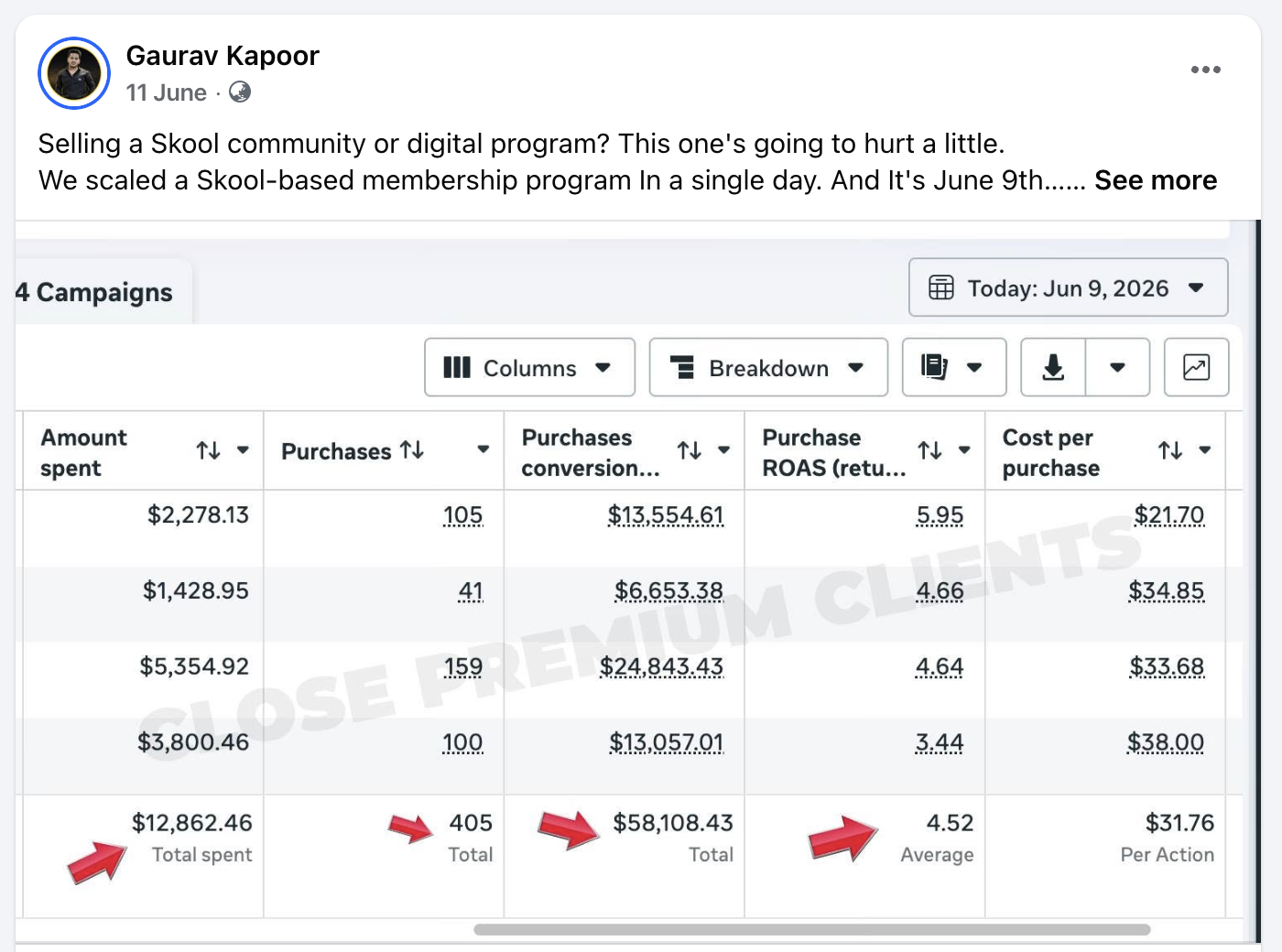
- $58,108 in one day at 4.52x on $12,862 of spend.
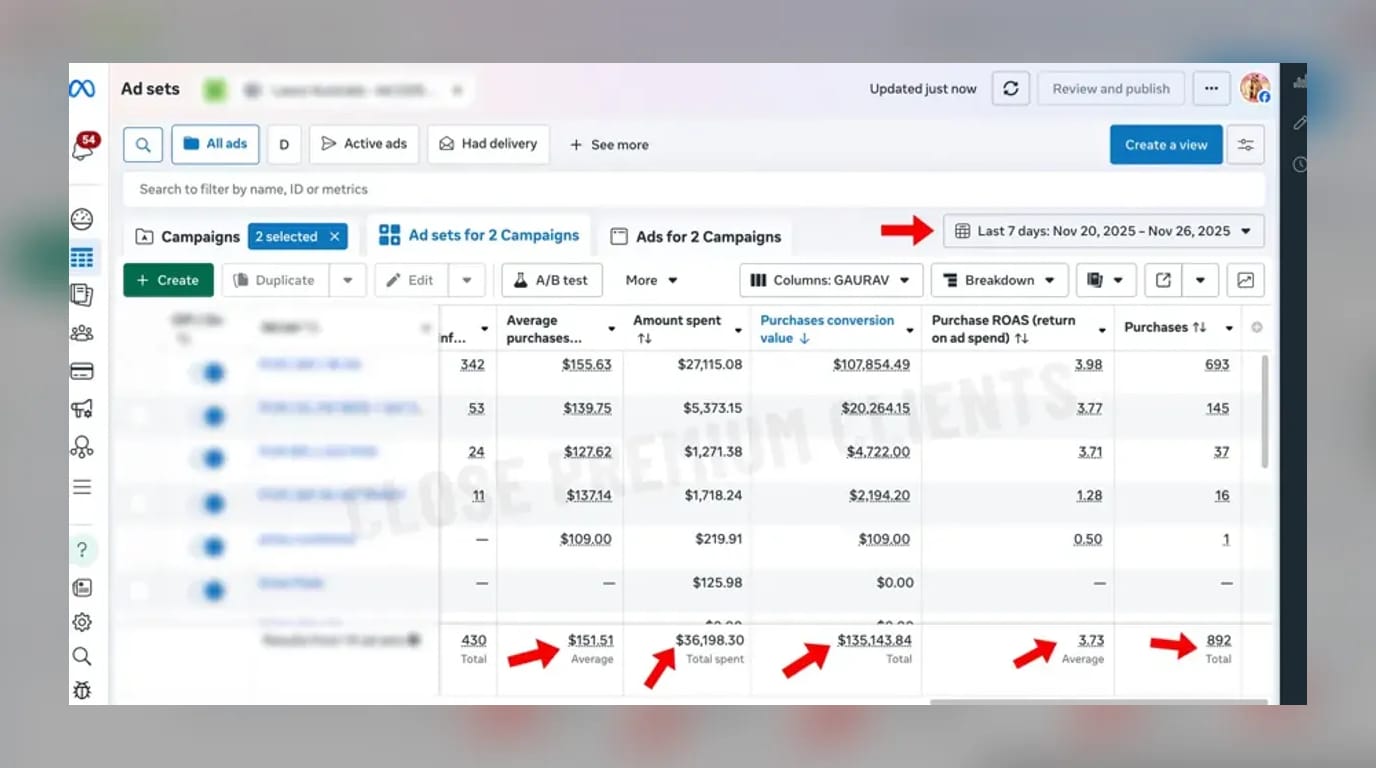
- $135,143 in revenue from 892 sales on $36,198 of spend.
Watch front-end conversion rate, bump take rate and cost per buyer daily as you scale. When cost per buyer climbs past AOV, refresh creative before raising budget again.
8. The Numbers to Watch Every Day
| Metric | What it tells you | If it is off |
|---|---|---|
| Sales page conversion rate | Whether the offer and page work for cold traffic | Test the headline, proof and price anchor |
| Order bump take rate | Whether the bump feels like an obvious add-on | Rewrite the bump headline or make it more complementary |
| Upsell take rate | Whether the upsell is the logical next step | Add a short video or change the offer angle |
| Cost per buyer | What each customer costs in ads | Refresh creative before raising budget |
| AOV minus cost per buyer | Whether the funnel self-liquidates | Fix this before scaling anything |
Check these daily during the first two weeks and weekly after that. Most problems show up in one number long before they show up in revenue.
9. When a Low Ticket Funnel Is the Wrong Choice
This model is powerful but not universal. It tends to struggle when:
- There is no backend. Without a next offer, the best case is break-even and the worst case is a slow loss.
- The product needs a conversation. If buyers need questions answered before they trust you, a booked-call funnel will usually work better.
- You sell local services. Roofers, HVAC companies and clinics generally do better with a short lead form and instant follow-up than with a paid digital product.
- Cash flow cannot wait. If the funnel liquidates at less than 100%, the backend has to close the gap, and that can take weeks.
If one of these describes you, look at our sales funnel agency options for booked-call and lead funnels instead.
10. The Backend That Makes It Profitable
A low ticket funnel without a backend is a break-even machine at best. The buyer list is the asset. In the $847K build, the majority of collected revenue came after the first purchase, from an email sequence, a buyers-only workshop and a high-ticket offer sold on calls.
- Email sequence: teach with the product, then invite buyers to the next offer. Our email nurture sequence template is a good starting point.
- Mid-ticket offer: a workshop, program or membership at a few hundred dollars.
- High-ticket offer: sold on a call to buyers who apply, using the structure in how to build a high ticket funnel.
If you want the full system built, including checkout, bump, upsells, tracking and backend automation, see the low-ticket scaling system. We build funnels in 5 to 10 business days on fixed pricing. More structures are in our sales funnel examples, or book a strategy call and we will check whether your offer can self-liquidate.
Results from this playbook
Verified client results built on the system in this article, with the numbers from the ad account and CRM.
- $57,577.57RevenueLow-Ticket Funnel Case Study: $58K Revenue on $23K Ad Spend
- 132SalesLow-Ticket Funnel Case Study: 132 Sales
- $1,000,000+ScaledDTC Brand Case Study: $1M+ in Sales at 4.6x ROAS
- $449,221in 49 DaysShopify Store Case Study: $449K in 49 Days at 4.2x ROAS
All low-ticket funnel case studies · All Shopify & DTC eCommerce case studies
Frequently Asked Questions
What is a low ticket funnel?
A low ticket funnel sells an inexpensive product, usually between $7 and $47, directly from an ad. Order bumps and one-click upsells raise the average order value so the front end covers ad spend. The real goal is a list of buyers who are far more likely to purchase higher-priced offers later.
What should I sell in a low ticket funnel?
Something a cold prospect can buy in minutes and use the same day: templates, a short training, a toolkit, a challenge or a paid workshop. The product should solve one specific problem and naturally create demand for your main offer. Long courses that take weeks to consume make poor front ends.
Is a low ticket funnel the same as a tripwire?
They are closely related. A tripwire is usually a single cheap product offered after an opt-in. A low ticket funnel is designed from the start with an order bump and upsells so the total order value, not just the first product, pays for the traffic. Both aim to turn prospects into buyers quickly.
How much ad spend do I need to test a low ticket funnel?
Enough to get meaningful purchase data, which depends on your cost per buyer. One of our clients tested on modest spend and made 132 sales on $1,214.35. Set a budget that buys at least a few dozen purchases before judging conversion rate, bump take rate and upsell take rate.
Can a service business use a low ticket funnel?
Yes. A paid workshop, template pack, audit or mini-course works well as a front door, with the service or a high-ticket program as the backend. Buyers are usually more responsive than free leads. Service businesses that sell mainly through local quote calls, however, are often better served by a lead funnel.

Rahul Kapoor
Co-founder of Funnels That Print and lead on CRM automation, speed-to-lead systems, AI voice calling agents and server-side tracking. Rahul has built the GoHighLevel workflows, Meta Conversions API pipelines and reminder automations behind 275+ client funnels.
More from Rahul ↗