1. What a Slow Response Actually Costs You
Speed to lead is the time between a prospect raising their hand and your business making first contact. It is the most measurable and most neglected number in lead generation. The research is consistent: contacting a lead within the first minute increases the odds of qualifying them by nearly four times compared to waiting 30 minutes, and the odds drop by a further 80% after the first hour.
Yet when we audit new clients, the median response time is between 42 minutes and 4 hours, and leads that arrive after 6 PM are typically not touched until the next morning. On a $20,000 monthly ad budget that is thousands of dollars of intent evaporating every week.
The good news is that this is a systems problem, not a people problem. Every piece of the 60-second follow-up stack described below runs on automation, and it is the foundation of every CRM automation build we deliver.
2. The 60-Second Stack at a Glance
Instant SMS Acknowledgement
A personalised text confirming the request, naming the next step and asking one qualifying question.
AI Voice Call Attempt
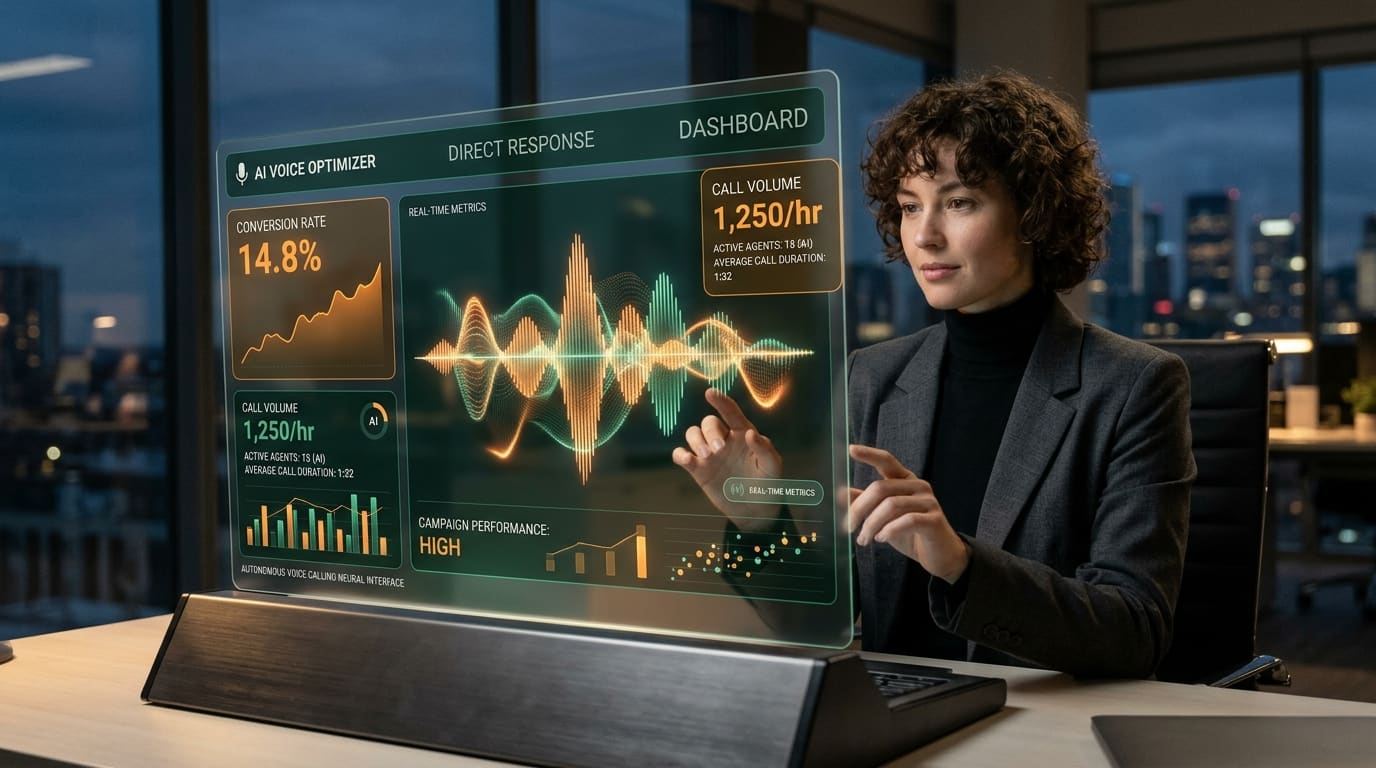
An AI calling agent dials, confirms the request, asks budget and timing, and books directly onto the calendar.
Email With Proof and Booking Link
A short email containing a 60-second video, two relevant case studies, and the booking link.
Multi-Channel Nurture
Eight further touches across SMS, call and email for anyone not yet booked, then a soft close.
3. Minute One: SMS, AI Call and Email in Parallel
The SMS (sent at second 10)
Short, human, and ending in a question so the thread stays open:
"Hi {first_name}, it's {agent} from {company}. Got your request about {service}. I'm going to give you a quick call in a moment. If now's bad, what time today works better?"
The AI call (dialled at second 30)
The voice agent follows a four-part script: confirm it is the right person and reference the form, disclose that it is an AI assistant for the team, ask two qualifying questions, then offer two specific calendar slots. If the prospect asks something off-script, the agent answers from a knowledge base and returns to booking. We detailed the latency and guardrail requirements in our AI sales funnel architecture guide.
The email (sent at second 50)
Subject line uses the service name, not "Thanks for your enquiry". Body contains one sentence of context, a short video from the founder, two proof points, and a single booking button. No newsletter styling.
4. Missed-Call Text-Back and Inbound Coverage
Inbound calls that go unanswered are leads too. A missed-call text-back automation fires an SMS within 5 seconds of any unanswered inbound call: "Sorry we missed you, how can we help?" and routes the reply into the same pipeline. For businesses with heavy phone traffic such as home services and medspas, this one workflow typically recovers 15% to 25% of inbound opportunities that would otherwise have called the next competitor.
Pair it with the AI agent as a 24/7 answering layer and nothing is lost after hours.
5. The 5-Day Nurture Sequence for Unreached Leads
| Timing | Channel | Angle |
|---|---|---|
| Hour 2 | Call (AI or human) | Second attempt, different time of day |
| Hour 4 | SMS | "Still want help with {service}? Reply 1 for a call, 2 for a text chat." |
| Day 1 AM | Case study matching their industry | |
| Day 1 PM | Call | Third attempt |
| Day 2 | SMS | Short video walkthrough link |
| Day 3 | FAQ and objection handling | |
| Day 4 | Call + voicemail drop | Final live attempt |
| Day 5 | SMS | Soft close: "Should I close your file for now?" |
Every touch stops the moment a lead books or replies, and booked leads move into the show-up reminder sequence instead.
6. Round-Robin Routing and Human Handoff Rules
Automation handles the first minute. Humans still close. The handoff rules that keep both sides clean:
- Qualified and booked by AI: assigned round-robin to the closer, who receives the call transcript and lead score in the CRM.
- Reached but not booked: flagged for a human call within 15 minutes during business hours.
- Not reached after 3 attempts: stays in the automated nurture with no human time spent.
- Reply contains a question the agent cannot answer: instant Slack or SMS alert to the owner.
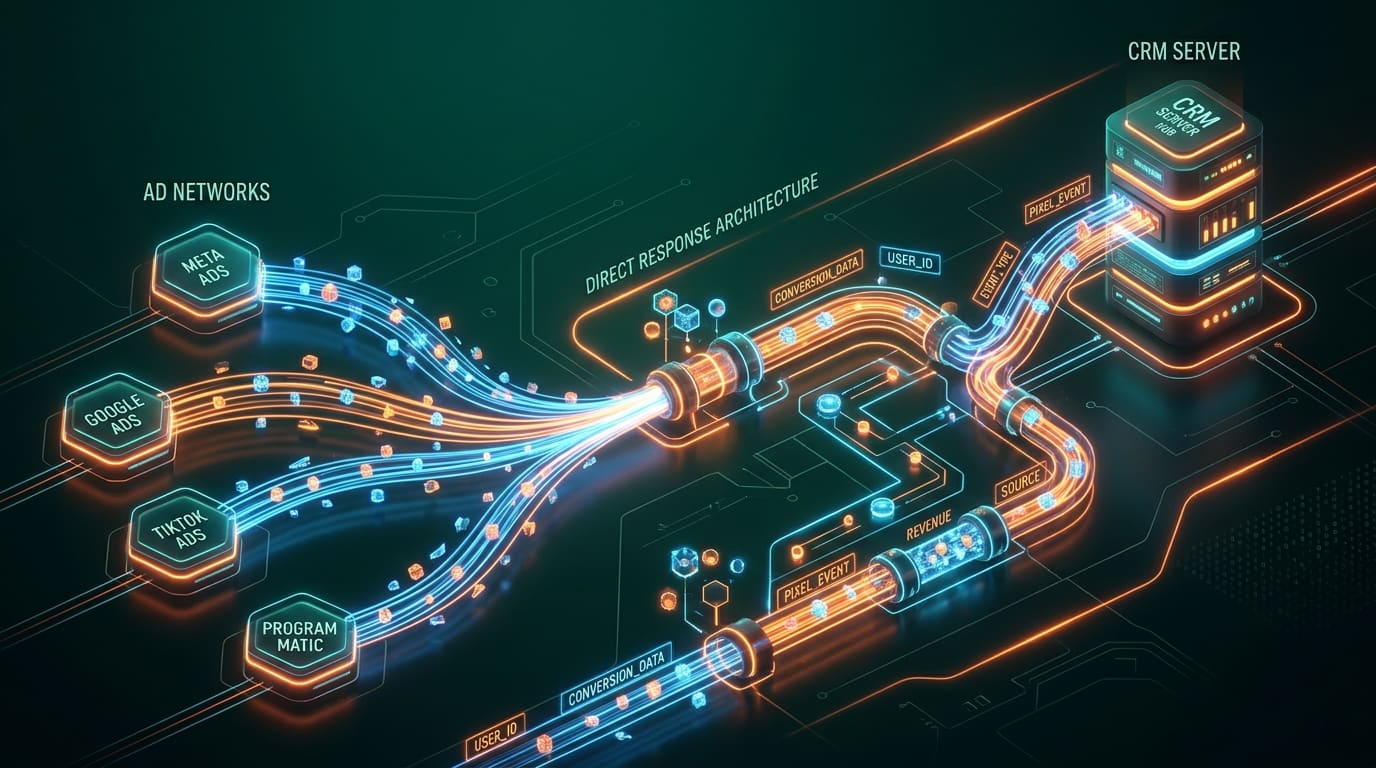
Each stage change also fires a server-side conversion event back to Meta and Google, so your ads learn from qualified and booked leads rather than form fills. See the Meta Conversions API setup guide for the event map.
7. Building It in GoHighLevel, Step by Step
Pipeline stages
New Lead, Contacted, Qualified, Booked, Showed, Won, Lost. Keep it to seven. Every automation keys off a stage change.
Trigger: form submitted or Facebook lead form received
One workflow per lead source so you can measure speed and conversion by channel.
Actions in order
Send SMS, wait 20 seconds, trigger AI call via webhook or native voice agent, wait 20 seconds, send email, then branch on "replied", "booked" or "no response".
Goal events and exits
Set "Appointment booked" as the workflow goal so every branch stops instantly when the lead books. Add an opt-out keyword exit.
Report on time-to-first-touch weekly
Add a custom field stamped at submission and at first contact. If the median creeps above 60 seconds, something in the chain is broken.
This stack is part of every funnel we ship. Combined with an interactive diagnostic front end, it is how the $1.52M consulting funnel brought cost per booked call down from $280 to $112. To have it built for your pipeline in 5 to 10 business days, book a strategy call.
Frequently Asked Questions
What is a good speed-to-lead benchmark?
Under 5 minutes is the traditional benchmark, but with automation there is no reason to be above 60 seconds. Our deployments target a first SMS within 15 seconds and a first call attempt within 45 seconds of form submission, including nights and weekends.
Will an AI calling agent annoy leads?
Not when it is set up correctly. The call should arrive seconds after the person submitted a form asking to be contacted, open by referencing what they requested, disclose that it is an AI assistant, and offer to book a time rather than pitch. Our connected-call satisfaction scores average 4.6 out of 5.
Do I need GoHighLevel specifically to build this?
No. The same architecture works in HubSpot, ActiveCampaign, Zoho or a custom stack. We reference GoHighLevel because it bundles SMS, email, calendars, pipelines and workflows in one place, which keeps the handoffs under a second.
How many follow-up touches are too many?
Across our data the response curve flattens after 8 to 10 touches in 5 days. Beyond that, move the lead to a low-frequency monthly nurture. Every touch should offer a clear next step and an easy way to opt out.

Rahul Kapoor
Co-founder of Funnels That Print and lead on CRM automation, speed-to-lead systems, AI voice calling agents and server-side tracking. Rahul has built the GoHighLevel workflows, Meta Conversions API pipelines and reminder automations behind 275+ client funnels.
Meet the team ↗